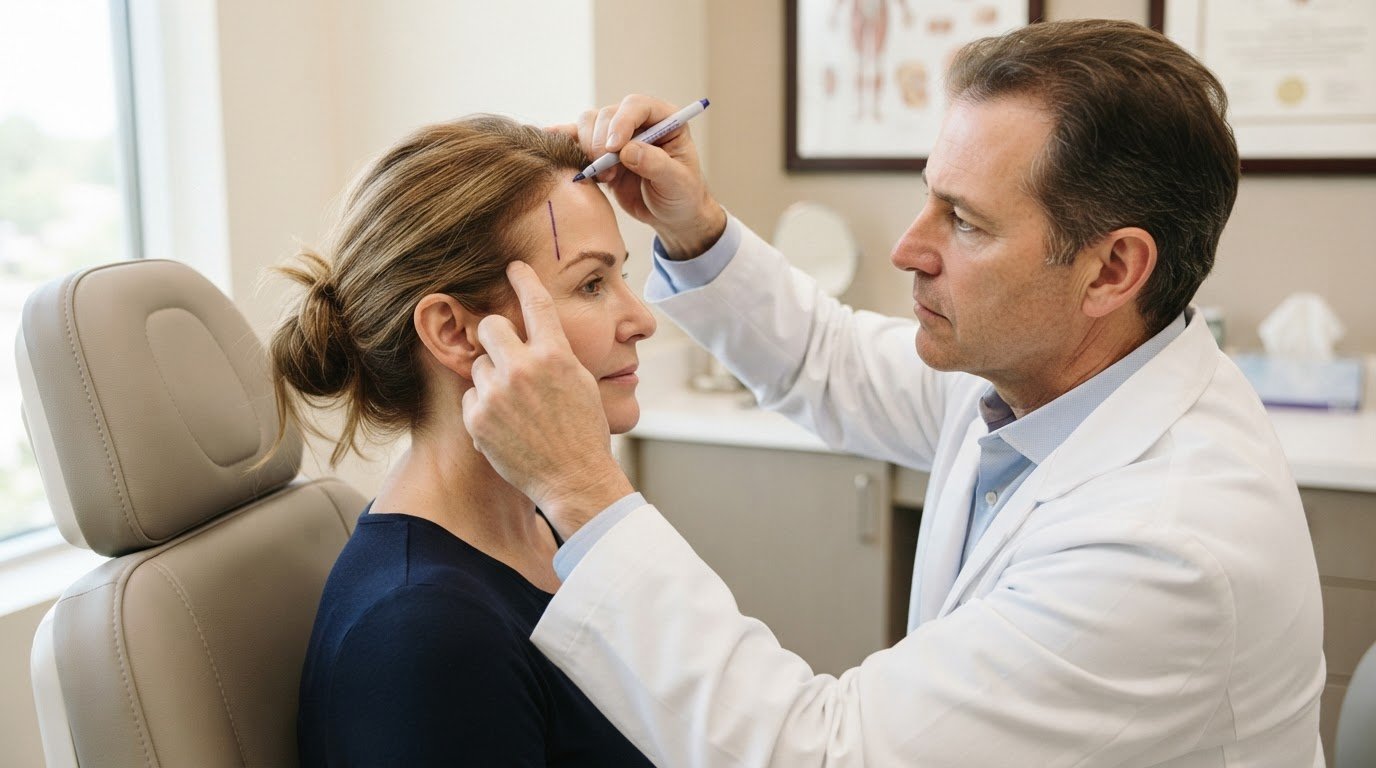
A temporal brow lift technique may suit someone who wants to raise the outer brow without a full brow lift. It focuses on the lateral brow, with incisions near the hairline above the temples. If sagging also affects the central or inner brow, another technique may better address those areas.
It’s understandable to focus on the incision, but the right approach also depends on where the brow has descended and how much correction is needed. This guide explains candidacy, how techniques and incision placement vary, and what to consider about risks and recovery. Understanding the pattern and degree of sagging can help you approach a consultation with a clearer sense of the options.
Key Takeaways
- A temporal lift focuses on the outer brow, so consider where sagging is most noticeable when weighing this approach.
- Incisions are generally placed near the temples within or behind the hairline, with placement shaped by the technique.
- Central or inner-brow concerns may call for a different approach than a lift focused on the lateral brow.
- Understand potential swelling and bruising, and how smoking can affect healing and complication risk.
- Compare the options by the area they address, their incision pattern, and the recovery demands that fit your needs.
Who Is a Good Candidate for a Temporal Brow Lift?
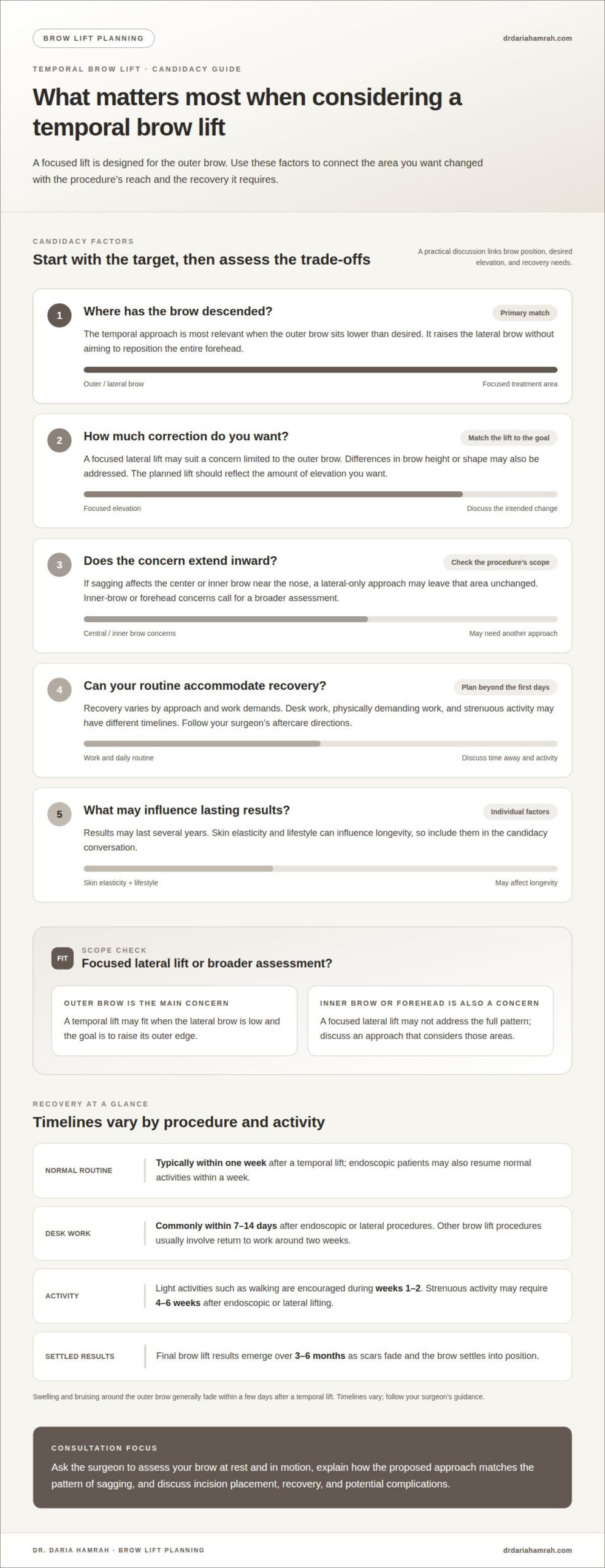
A temporal brow lift may suit people whose main concern is a low outer brow. This lateral lift raises the brow’s outer edge without aiming to reposition the entire forehead. It may also address differences in brow height or shape. When sagging is concentrated in the center or near the nose, this approach may not address the full concern.
Good candidacy depends on matching the procedure’s reach to the area you want changed. A focused lift is most relevant when the lateral brow sits lower than desired, while concerns involving the inner brow and forehead call for a broader assessment. Skin elasticity and lifestyle can also influence how long results last. Results may last several years, with longevity shaped by these factors.
Choose a surgeon with facial surgery training and experience performing brow lifts. During consultation, the surgeon should assess your brow at rest and in motion, explain how the proposed approach fits your pattern of sagging, and discuss incision placement, recovery, and potential complications.
Recovery timelines vary by approach. After a temporal lift, patients typically return to their normal routine within one week. Endoscopic brow lift patients may also resume normal activities within a week, while desk work after endoscopic or lateral procedures commonly resumes within seven to fourteen days. For brow lift procedures other than endoscopic lifts, return to work is usually around two weeks.
Plan for the full healing process, not only the first days at home. Light activities such as walking are encouraged during weeks one to two, while strenuous activity may require four to six weeks of recovery after endoscopic or lateral lifting. Physically demanding work may require more time away than desk work. Follow your surgeon’s aftercare directions for activity and forehead movement.
Swelling and bruising can make early results look different from the settled outcome. After a temporal lift, swelling and bruising around the outer brow generally fade within a few days. Final brow lift results emerge over three to six months as scars fade and the brow settles into position. Keep this longer timeline in mind when assessing symmetry or visible incision changes.
A practical candidacy discussion connects three factors: where the brow has descended, how much elevation you want, and what recovery your work and daily routine allow. If your concern is limited to the outer brow, a temporal approach may fit your goal. If the inner brow also weighs on the eyes, a focused lateral lift may leave that area unchanged.
Temporal brow lift incision placement
Temporal brow lift incisions sit near the temples, within or behind the hairline, to reach the outer brow. Their position and length affect scar visibility and may influence the hairline.
Incision Location and Length
A temporal lift uses an incision above each temple, placed at or behind the temporal hairline. Descriptions of incision length vary: some say about one inch per side, while others describe two- to three-inch incisions. These measurements reflect different descriptions of the approach. Planned placement matters because the surgeon needs access to reposition tissue above the lateral brow while considering the surrounding hair and facial features.
Hairline Effects of Incision Choices
Hairline placement describes where the incision sits in relation to hair-bearing skin. Temporal lift scars tend to be concealed beneath temple hair, while an incision within the scalp may be less visible when hair is worn down. A temporal approach can also help restrain postoperative hairline rise. Lateral brow lift incisions are typically two incisions within the temporal hairline, each three to four centimeters long. These distinctions help set expectations about scar location, but do not guarantee invisibility.
Incision placement also differs from an eyelid incision. A temporal brow lift targets tissue above the outer brow rather than making its main incision along the eyelid. This distinction matters if your concern is brow position, eyelid skin, or both. The treatment plan should identify the area being addressed and where each incision would sit.
Ask for a clear explanation of the proposed incision pattern during surgical planning. A useful discussion covers the location on each side, the expected length, and how the incision relates to the hairline. It should also connect the incision pattern to the intended lift. Since a temporal approach focuses on the outer brow, the incision placement should match that target.
After surgery, follow the wound-care directions provided by your surgical team. If incisions are covered, bandages are likely removed within one to three days. Stitches are usually removed within seven to ten days. Resting with your head raised during the first few days and applying cold compresses can help ease swelling. Avoid excess pressure on the forehead and excessive movement during recovery.
For a more informed discussion of how facial goals relate to incision choices, explore facial rejuvenation planning.
Brow lift risks and complications
Every brow lift procedure involves recovery and potential complications. Swelling and bruising may develop during the first 1-7 days after surgery. After a temporal lift, bruising around the outer brow generally fades within a few days. These visible changes are part of the early healing period, but sudden or worsening symptoms need prompt attention.
The cosmetic goal and surgical plan both shape the discussion of risks. During consultation, ask the plastic surgeon to explain the planned lift, incision locations, and which tissues will be repositioned. A temporal approach, for example, focuses on the outer brow. Knowing the target helps clarify which areas the procedure is intended to change and which concerns may remain outside its scope.
Smoking is a specific risk factor to address before scheduling surgery. Patients who smoke are advised to stop before surgery and during recovery because smoking can raise complication risk and slow healing. Include smoking and nicotine use in your medical history discussion. The surgical team can explain how this factor affects preparation and recovery planning for your brow lift.
Follow the aftercare plan closely, and know which symptoms require urgent action. Contact your healthcare team right away after surgery if you experience sudden swelling, shortness of breath, chest pain, or irregular heartbeats. These symptoms differ from expected swelling or bruising around the outer brow. Don’t wait for a routine follow-up if any of these warning signs occur.
Use the consultation to make risks specific to the approach under consideration. Ask how the surgeon plans to manage the incision, what changes to expect during the first 1-7 days, and which signs should prompt immediate contact. A clear response should distinguish ordinary bruising from sudden swelling, and routine recovery from symptoms such as chest pain or shortness of breath.
Bring relevant health information to the discussion, including smoking status and medicines or supplements. Before a brow lift, patients may need to avoid blood thinners, aspirin, anti-inflammatory drugs, and herbal supplements because they can raise bleeding risk. Don’t stop prescribed medication on your own. Discuss each item with your healthcare team, which can provide instructions suited to your treatment plan.
Understanding risks supports informed decisions, not alarm. Weigh the expected benefit of lifting the lateral brow against the incision and recovery involved. A carefully discussed plan identifies the surgical target, preparation steps, and urgent warning signs before the procedure. This shared understanding helps patients distinguish ordinary healing from symptoms that need immediate medical attention.
Candidate considerations and degree of brow sagging
The pattern of descent matters more than a general impression of a tired expression. A low lateral brow with an appropriately positioned inner brow presents a different concern from sagging across the full forehead. A focused temporal lift elevates the outer brow, but may not adequately address aging-related changes in the central and inner brow.
During assessment, the plastic surgeon considers brow position, shape, and differences between the two sides. For example, one lateral brow may sit lower than the other, or the outer edges may have different contours. A temporal lift can address asymmetry in brow height and shape. The plan should establish whether the concern is limited to the outer brow or extends across the forehead.
The degree and location of sagging help distinguish a focused lift from a broader approach. A temporal lift repositions tissue above the outer brow and removes a small amount of excess skin or scalp. This limited target suits outer-brow concerns. By contrast, a coronal brow lift uses a longer incision along the scalp and is described for severe sagging when a broader lift is sought.
An endoscopic approach offers another option for forehead and brow concerns. It uses a small camera to let the surgeon view and manipulate forehead muscles and tissues through several small incisions hidden behind the hairline. This broader access differs from the temporal approach, which focuses on lateral elevation. The distinction matters when sagging involves more than the outer brow.
Skin and hairline considerations also shape the discussion. A temporal lift can help restrain postoperative hairline rise, while incision position affects where scars sit among the hair. The surgeon weighs the desired brow position against the existing hairline and the areas that need elevation. Someone seeking a subtle lift at the temples has different priorities from someone with pronounced descent across the forehead.
Before choosing an approach, describe the change you want in specific terms: lifting the outer brow, balancing unequal brow heights, or addressing descent across the forehead. Then compare that goal with the area each technique reaches. A lateral lift focuses on the outer brow, while an endoscopic or coronal approach addresses a broader region. This comparison aligns the aesthetic goal with the procedure’s reach.
In practical terms, suitability rests on three observations: where the brow sits, how far the descent extends, and whether asymmetry is present. A focused temporal lift fits lateral concerns, while severe or widespread sagging points toward considering a broader technique. Matching these findings to the planned correction clarifies what the procedure is designed to change and what it leaves untouched.
Brow lift procedure techniques
A temporal brow lift elevates the outer brow by repositioning tissue above its lateral edge. It’s designed for the temple-side brow, rather than lifting the entire forehead.
Anesthesia and operating time depend on the surgical plan, the areas treated, and whether procedures are combined. The chosen technique and extent of tissue work shape both decisions.
The central choice is how much of the brow and forehead needs repositioning. Each technique has a different access pattern and target, so the best comparison starts with the area you want changed.
Temporal lift: The surgeon lifts tissue above the outer brow and removes a small amount of excess skin or scalp. This focused approach can address lateral brow asymmetry. It may not adequately address aging-related changes in the central or inner brow, so expectations should match its narrower target.
Direct lift: This approach removes a segment of skin and muscle just above the brows. Its incision sits close to the area being lifted. This direct access differs from hairline approaches, and the planned correction should account for the visible incision location.
Endoscopic lift: A small camera lets the surgeon view and manipulate forehead muscles and tissues. The approach uses three to five separate incisions, each one inch long, hidden behind the hairline. Published series report elevation of 3 to 4 mm centrally and 4 to 5 mm laterally. Those figures describe reported results, not a personal prediction.
Coronal lift: This technique uses a longer incision along the scalp. It is described for people with severe sagging who seek long-lasting results. Its broader access distinguishes it from a temporal lift, which focuses on the outer brow.
Gliding lift: This method uses four small incisions within the hairline. Its access pattern differs from both the endoscopic approach and the longer coronal incision. The technique selected influences how tissue is reached and repositioned.
Think of these methods as different routes to a refreshed position, not interchangeable versions of one procedure. A focused lateral change points toward temporal lifting; descent across the forehead calls for comparing broader techniques. Incision placement, the intended lift, and the areas left untreated all shape the decision.
Explore brow lift options to discuss which approach aligns with your facial goals.
Dr. Daria Hamrah
Dr. Daria Hamrah can help you place brow concerns within a thoughtful facial rejuvenation plan. If your questions extend beyond brow position to broader facial aging, discussing the Deep Plane Facelift (Longevity Facelift) may help clarify which concerns relate to facial structure. For those considering a nonsurgical option, Botox is another approach to discuss, with different aims and maintenance needs than surgery.
A consultation is a useful next step when you’re weighing a focused lift against other approaches or want to understand how your goals fit together. You can discuss the areas that concern you, the change you hope to see, and the differences between surgical and nonsurgical options. Contact Dr. Daria Hamrah to discuss your facial rejuvenation goals.
Choose a Plan That Fits Your Facial Goals
The next step is to turn your aesthetic priorities into a focused discussion. Consider which changes matter most, how much change feels right, and how the temporal brow lift technique may fit within your broader facial goals. A consultation can connect those priorities with a suitable plan, including whether your concerns involve the brow alone or other facial areas.
Dr. Daria Hamrah offers facial procedures and treatments including a Deep Plane Facelift (Longevity Facelift), rhinoplasty, and Botox. These options address different concerns, so the most relevant discussion begins with the outcome you hope to achieve, not a procedure name. Your goals and anatomy guide that conversation.
If you’re ready to explore your options, contact Dr. Daria Hamrah to discuss your facial rejuvenation goals. A thoughtful next step can help you move forward with clarity and confidence.
Frequently Asked Questions
Making the Right Choice: Which Brow Lift Is Best for You?
The best approach depends on where your brow has descended and how much of the forehead is involved. A concern concentrated at the outer brow, for example, differs from sagging across the central forehead. Consider the area you want changed, the incision pattern, and your recovery needs together. A surgeon can assess your brow position and facial goals, then explain which technique addresses them.
Can brow lift be combined with other procedures?
A brow lift may be considered alongside another facial procedure when the treatment plan addresses distinct concerns. For example, someone concerned about both brow position and another area of facial aging can discuss whether one or more procedures suit their goals. The surgeon considers the areas involved, the overall surgical plan, and recovery needs. Combining procedures is a planning decision, not an automatic advantage.
First, Is It Actually the Brow?
The concern may involve brow position, eyelid appearance, or both. A useful consultation separates these areas: explain whether you notice a low outer brow, fullness near the upper eyelid, or a change across the forehead. The surgeon can assess each area and clarify which one a brow lift would address. This distinction helps avoid choosing a procedure for a concern it is not designed to treat.
How long do brow lift results last?
Results from a temporal brow lift may last several years, with skin elasticity and lifestyle influencing longevity. The change also occurs alongside continued aging, so the brow’s appearance can evolve over time. A lift may reposition the outer brow, for instance, while later changes in skin and facial tissues affect how that position looks. Discuss your long-term priorities as well as your immediate aesthetic goal.
What is the difference between endoscopic and lateral brow lift?
An endoscopic lift uses a small camera to view and manipulate forehead muscles and tissues through small scalp incisions. A lateral lift focuses on raising the outer brow, with incisions placed within the temporal hairline. In practical terms, the distinction is the treatment area and access method: broader forehead access versus a more focused lift at the brow’s outer edge.
What are the steps of the temporal brow lift surgical technique?
The temporal brow lift technique centers on repositioning tissue above the outer brow. The surgeon accesses the area through temple or scalp incisions, lifts the lateral brow, and may remove a small amount of excess skin or scalp. The exact plan depends on the intended correction and incision placement. Ask how each part of the plan relates to your brow shape and desired result.
What incision locations and approaches are used for a temporal brow lift?
Temporal lift incisions are placed at the hairline above the temples or within the scalp, where hair can conceal the resulting scars. Descriptions include incisions about one inch long above each temple, as well as two- to three-inch incisions on each side. The planned approach determines their location and length. Ask the surgeon to describe the incision pattern for your specific lift.
How does a temporal brow lift compare with an endoscopic or full brow lift?
A temporal lift focuses on the outer brow, while an endoscopic approach can work across forehead tissues. A coronal, or full, lift uses a longer scalp incision and is described for severe sagging. Consider the area needing correction: an outer-brow concern is more limited than descent across the forehead. The technique should match that distribution, not simply the procedure name.