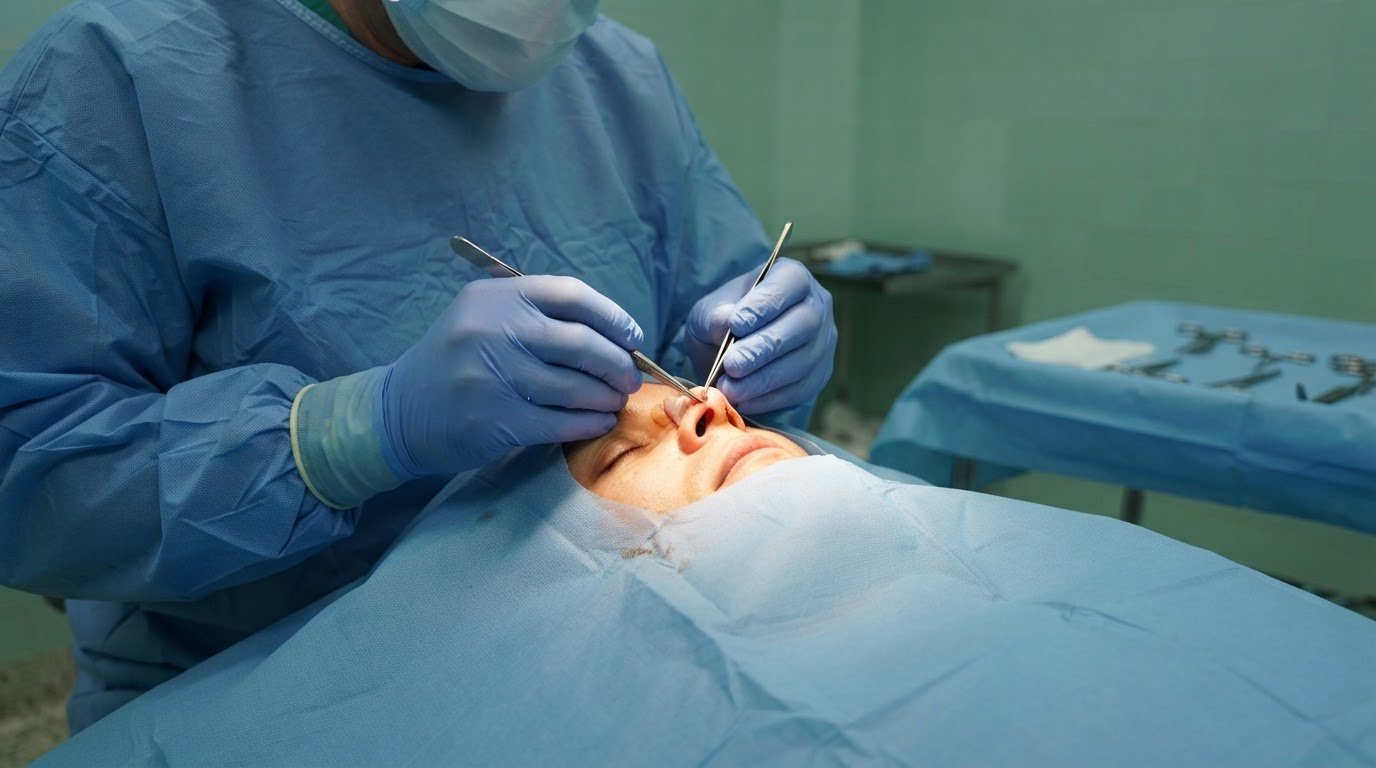
Rhinoplasty for a crooked nose can reshape nasal bones and cartilage, reposition the septum, and improve facial balance. The surgical plan depends on what makes the nose look crooked, whether breathing is affected, and how any past trauma changed its structure. The goal is a more balanced nose, not necessarily a perfectly straight one.
It’s understandable to hope surgery can simply move the nose into a straight line. But a crooked appearance can involve several connected structures, so adjusting the bones alone may not correct misaligned cartilage or the septum. If repeated injuries have severely damaged nasal tissues, complete straightening may not be possible in one surgery.
This article explains what surgery can change, how surgeons assess the nose and airways, and why anatomy and injury history shape the plan. You’ll also learn about rhinoplasty’s limits and the difference between improving alignment and promising perfect symmetry.
Key Takeaways
- Assessment considers the nose’s shape, underlying structures, facial proportions, and breathing concerns to identify what is contributing to the crooked appearance.
- Reshaping or repositioning may involve nasal bones, cartilage, or the septum; addressing only one structure may leave other alignment issues.
- Congenital anatomy, prior injuries, and previous surgery can all influence the surgical plan and the changes that are practical.
- The aim is improved balance and, where relevant, better airflow, rather than a promise of perfect straightness or symmetry.
- Understanding which structures are involved can help you have a more informed conversation about the potential changes and limits of surgery.
How Can Rhinoplasty Correct a Crooked Nose?
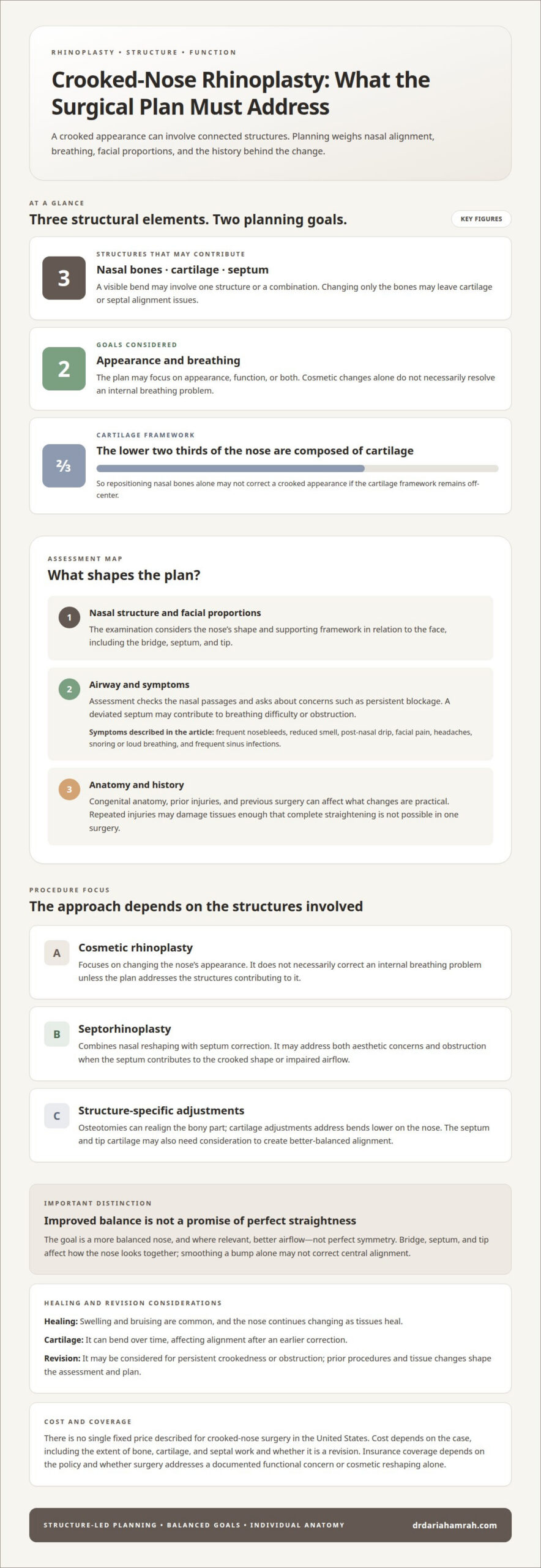
Rhinoplasty can improve crookedness by changing the nasal bones, cartilage, or septum. Assessment also considers facial proportions and breathing, since appearance and airflow can involve different structures.
Nasal Structure and Breathing Assessment
A nasal assessment examines the nose’s shape, supporting framework, and airway in relation to facial proportions. A visible bend may come from misaligned bones, cartilage, a deviated septum, or a combination. The surgeon also considers breathing concerns, such as persistent blockage. These findings guide whether the plan focuses on appearance, function, or both.
A deviated septum means the bone and cartilage dividing the nasal passages sit off-center. It can contribute to breathing difficulty or airway blockage, as well as frequent nosebleeds, reduced smell, post-nasal drip, facial pain, headaches, snoring, loud breathing, or frequent sinus infections. Describing your symptoms helps connect the examination to your daily concerns.
Cosmetic rhinoplasty focuses on changing the nose’s appearance. Septorhinoplasty combines nasal reshaping with septum correction, which can address both aesthetic concerns and obstruction. The surgical plan depends on whether the septum contributes to the crooked shape or impaired airflow.
Septal Deviation and Airway Obstruction
Airway obstruction occurs when structures inside the nose restrict airflow. A crooked septum can narrow one side, while external alignment and internal support can also affect breathing. Assessment considers both the visible contour and the nasal passages. For example, straightening the bridge alone may not resolve obstruction if the septum remains off-center.
Yes, rhinoplasty can improve breathing when the plan addresses structures contributing to obstruction, such as a deviated septum. Correcting nasal bones and cartilage can improve symmetry and may improve the nasal airway. Cosmetic changes alone don’t necessarily resolve an internal breathing problem, so the assessment should consider both goals.
Insurance coverage depends on the policy and the reason for surgery. A plan may treat correction of breathing problems differently from cosmetic reshaping alone. Coverage depends on the documented functional concern and the policy’s terms.
There isn’t one fixed price for crooked-nose surgery in the United States. The price depends on the case and is given after a quote request; factors include the extent of bone, cartilage, and septal work, and whether the procedure is a revision.
Risks and complications depend on the structures being changed. Swelling and bruising are common, and the nose continues changing as tissues heal; cartilage can also bend over time. Revision rhinoplasty may be considered for persistent crookedness or obstruction after surgery, but prior procedures and tissue changes shape the assessment and plan.
Reshaping or repositioning nasal bones and cartilage
A crooked nose can involve misaligned nasal bones, cartilage, or both. Surgical reshaping addresses the structures creating the contour, rather than treating the visible line as a single, isolated feature.
Repositioning Nasal Bones and Cartilage
Repositioning changes the alignment of nasal bones and cartilage to improve overall symmetry. Osteotomies can realign the bony part, while cartilage adjustments address bends lower on the nose. Because the lower two thirds of the nose are composed of cartilage, changing bone position alone may leave the nose looking crooked if the cartilage framework remains off-center.
Columella and Nasal-Tip Cartilage
The columella is the tissue between the nostrils, and its position can affect how the nasal tip looks from the front and below. A philtrum that sits off the facial midline may suggest that asymmetry involves more than the nasal bones. The surgeon may need to consider the septum and tip cartilage together to create better-balanced alignment.
Cartilage Memory and Abnormalities
Cartilage can bend on its own over time after rhinoplasty, affecting alignment even after an earlier correction. Crookedness may also result from an abnormal cartilage framework, not just displaced bones. In one described surgical approach, the septum was moved, then sutured and anchored to help shape the nasal tip symmetrically. This illustrates why support and positioning matter alongside reshaping.
The nasal framework is assessed from top to bottom. A crooked nose involving both bones and cartilage may need changes along its full structure, since moving only the bones can leave cartilage misaligned. This is why surgeons assess the bridge, septum, and tip as connected features rather than assuming one adjustment will correct every visible angle.
Smoothing Bridge Bumps and Dips
A nasal bump can result from overdeveloped bone and cartilage, an injury, hereditary factors, or scar tissue that grows after trauma. A plastic surgeon can flatten a bump, raise a dip, and refine the profile. These adjustments change the bridge contour, while the plan accounts for the cartilage and bones supporting it.
For example, a dorsal hump can occur alongside crookedness and tip asymmetry. Addressing the hump alone may smooth the side profile without correcting the nose’s central alignment. The relationship between the bridge, septum, and tip shapes the result, since each feature affects how the nose looks from the front and in profile.
Cartilage support also matters during repositioning. If the septum is shifted to improve alignment, securing it can help maintain the intended tip shape. A detailed rhinoplasty assessment can connect these structural considerations with your aesthetic goals and breathing concerns.
Surgical planning based on anatomy and prior trauma
A surgical plan links visible asymmetry to the structures causing it. The examination considers the location and degree of crookedness, facial proportions, and changes caused by prior trauma.
Examination and Surgical Planning
An in-person examination assesses nasal structure, asymmetry, and the concerns surgery should address. A bridge deviation, bent septum, and displaced tip each call for different structural changes. The plan links each concern to its source rather than treating the nose as one uniform shape.
Describe previous injuries and procedures, including what changed afterward. For example, a nose that became crooked after an impact may have altered bone alignment, cartilage support, or both. The examination considers the deformity’s location and degree, so the plan can address affected areas rather than focusing only on the most noticeable angle.
When choosing a rhinoplasty surgeon for a crooked nose, look for specific rhinoplasty training and a detailed surgical plan. The plan should explain which structures contribute to the asymmetry and what changes are intended.
Anatomy, Trauma, and Facial Asymmetry
Anatomy and injury history shape how a surgeon interprets facial asymmetry and plans structural correction. A nose can look off-center in relation to other facial features, even when the visible bridge is not the only cause. A past injury can also change the underlying structure, making the current contour different from its original form.
Planning considers which structures cause the asymmetry, its location and degree, and whether trauma changed the nasal framework. A bump after injury, for instance, may reflect altered bone or cartilage, while an indentation can indicate a different structural change. These distinctions guide whether surgery focuses on repositioning, reshaping, or restoring support.
Rhinoplasty may address an uneven nasal contour by changing underlying nasal structures. For patients with both cosmetic concerns and breathing symptoms, the plan considers the relationship between alignment and the nasal airway. The intended changes should directly address concerns identified during examination.
Existing facial asymmetry is part of the planning. A surgeon considers how the nose relates to the surrounding face, since making the nose look centered doesn’t make every facial feature symmetrical. This helps set a realistic aesthetic goal: improving overall balance through changes to nasal structure, not assuming surgery can alter unrelated features.
Prior surgery adds another structural layer. Cartilage may have been reshaped or repositioned, and trauma may have changed the framework afterward. A detailed plan accounts for these changes alongside current asymmetry and breathing concerns. This is especially relevant when considering revision, because the examination must identify what remains misaligned before further changes are planned.
Congenital, traumatic, and iatrogenic causes
A crooked nose can result from inherited anatomy, an injury, or changes after medical treatment. Identifying the cause helps connect the nose’s current appearance and symmetry concerns with the structures that need attention.
Congenital and Genetic Causes
Congenital or genetic crookedness is present as the nose develops, with nasal bones or the septum positioned off-center. An uneven appearance may therefore reflect underlying structure rather than a later injury. For example, a nose that has looked crooked since childhood may have a different cause from one that changed after a direct impact.
Genetics can shape the nose’s framework, while facial proportions influence how its alignment appears. A bridge that looks off-center from the front may also relate to the septum or other facial features. The visible contour alone doesn’t identify the cause. An examination considers the position of the nasal bones and septum, along with the location and degree of asymmetry.
That distinction affects the surgical plan. If crookedness involves both bones and cartilage, correcting only the bone alignment can leave the lower framework off-center. If the septum contributes to the deviation, the plan considers its position too. These structural differences explain why two noses that look similarly crooked may need different approaches to improve appearance or symmetry.
Traumatic and Iatrogenic Causes
Traumatic crookedness follows an injury that changes nasal structure; iatrogenic changes arise in connection with medical treatment, such as prior nasal surgery. In both cases, the nose’s present shape may reflect more than its original anatomy. A direct impact, for instance, can leave a crooked bridge, bump, or indentation.
After trauma, the nasal bones or septum can sit off-center, and altered bone or cartilage can form a bump. Scar tissue that grows after trauma can also contribute to a raised area. The injury history helps explain whether the main concern is a shifted framework, a surface contour, or both. It also provides context for assessing facial asymmetry.
Prior rhinoplasty adds another factor. Surgery changes the nasal framework, and cartilage can bend over time afterward. A nose that becomes crooked after surgery needs an assessment of its current alignment, not assumptions based only on its appearance before treatment. This is especially relevant for patients considering revision.
The cause also informs the goal of correction. A congenital deviation, an injury-related bump, and post-surgical crookedness each reflect a different structural history. A surgeon with specific rhinoplasty training can explain how that history relates to current anatomy and set out a detailed plan. The goal is improved balance, with the approach tailored to the structures involved.
Rhinoplasty to straighten a crooked nose
Rhinoplasty for a crooked nose aims to improve alignment and facial balance, not necessarily create perfect straightness. The surgical plan depends on which structures are displaced, how tissues have changed, and whether breathing is affected.
Surgery may reposition the nasal bones and move the septum toward the midline. If cartilage also contributes to the deviation, the surgeon may reshape or support it during the same procedure. Treating only the bones can leave cartilage misaligned, so the goal is to address the connected framework rather than one visible angle.
Past injury can make correction more complex. Repeated fractures may severely damage the tissues, limiting how completely the nose can be straightened in one surgery. A prior operation can also leave altered cartilage or alignment. In revision procedures, the plan may include repositioning the septum and bones, refining the tip, or reshaping cartilage in the lower nose.
Structural support can matter when existing cartilage cannot provide the needed shape. Cartilage grafts may support nasal contours; in one described case involving trauma, cartilage from the patient’s nose helped address crookedness, airway function, and tip definition. The suitable approach depends on the framework and tissue changes found during examination.
Improved balance is a more useful goal than a promise of perfect symmetry. The nose relates to the rest of the face, and severe damage from repeated broken noses can limit complete straightening in one procedure. A detailed consultation should link each proposed change to a specific concern, such as a shifted bridge, septal deviation, or drooping tip.
Healing also affects when changes can be assessed. Swelling and bruising are common after nose reshaping surgery and gradually improve, while the nose continues changing as tissues heal over the following months. Following postoperative instructions and attending follow-up appointments supports proper healing and lets the surgical team assess the evolving result.
Bring a clear account of past injuries and procedures to your consultation, and describe both appearance and breathing concerns. This gives the surgeon context for assessing nasal position, tissue condition, and the structures involved. To discuss how a tailored rhinoplasty plan can address crookedness, arrange a consultation.
Dr. Daria Hamrah: Deep Plane Facelift (Longevity Facelift)
Dr. Daria Hamrah offers rhinoplasty for patients seeking an assessment of nasal alignment, appearance, or breathing concerns. If a crooked nose affects your confidence or airflow, a consultation can connect those concerns with the nasal structures involved and clarify what surgical changes may address them.
Rhinoplasty is the relevant service for assessing and reshaping the nose. The Deep Plane Facelift, also called the Longevity Facelift, addresses a different area of facial rejuvenation and does not treat nasal crookedness. A focused discussion can help you understand the distinction and consider the option that matches your goals.
To discuss nasal concerns and rhinoplasty with Dr. Daria Hamrah, contact the practice.
Choose Your Next Step With Clarity
The next step is to turn your concerns into a focused conversation. Before a consultation, consider what you most want to change, how your nose affects breathing, and whether an injury or previous procedure altered its shape. These details help clarify your priorities and what you want the evaluation to address.
For rhinoplasty for a crooked nose, focus the discussion on which features feel out of balance, what functional concerns you experience, and what outcome would feel natural for your face. Ask about the proposed approach, healing, and the limits of correction. No surgical plan can promise perfect straightness, particularly when prior damage has changed nasal tissues.
Dr. Daria Hamrah offers rhinoplasty as part of her facial surgery practice. If you’re ready to explore your options, contact Dr. Daria Hamrah to begin a thoughtful conversation about your goals. A clear understanding of the plan can help you move forward with confidence.
Frequently Asked Questions
What can’t a nose job do?
A nose job can’t change skin quality, remove spots or redness, or guarantee perfect symmetry. Rhinoplasty reshapes nasal contours and underlying structures, so skin concerns require a different approach. Surgery also may not fully straighten a nose in one operation when repeated fractures have severely damaged its tissues. Separate your goals for contour, breathing, and skin, since each relates to different treatment needs.
What Should You Expect During Recovery?
Expect swelling and bruising after nose reshaping surgery, with gradual improvement as healing progresses. The nose can keep changing over the following months while swelling resolves and tissues settle, so its early appearance doesn’t represent the final contour. Follow postoperative instructions and attend scheduled follow-up appointments to support healing. When tracking changes, note how swelling and breathing concerns evolve between visits rather than judging alignment from a single early observation.
Will my nose look completely straight after surgery?
Surgery aims to improve balance, not promise a perfectly straight nose. The facial midline and surrounding features influence how straight the nose appears, while previous fractures can damage tissues and limit correction. A useful expectation is a more harmonious alignment that fits your face. During planning, discuss which view matters most to you, such as the front, profile, or relationship between the bridge and nasal tip.
What causes a crooked nose, and how is it diagnosed?
A crooked nose can result from genetics, trauma, or nasal bones or the septum sitting off-center. Diagnosis begins with examining the nose’s shape, structure, facial proportions, and breathing concerns. For example, a bump after an injury can reflect changed bone or cartilage, while persistent blockage can point to septal deviation. Sharing when the crookedness began and whether an injury or earlier surgery changed it gives the examination useful context.
What happens during crooked nose rhinoplasty, and how long does recovery take?
Rhinoplasty may reposition nasal bones, move the septum, and reshape or support cartilage, depending on the structures involved. Your care team can discuss anesthesia as part of surgical planning. Swelling and bruising gradually improve, but the nose continues changing as tissues heal over the following months, so recovery does not follow an identical timeline for everyone. Follow postoperative instructions and attend follow-up visits. These appointments let the surgical team assess healing rather than judge the result from an early snapshot.
How successful is crooked nose rhinoplasty, and can the nose become crooked again?
There isn’t a single success rate that describes every crooked-nose procedure; success relates to the planned goals, such as improved balance or airflow. Cartilage can bend over time after rhinoplasty, and severe tissue damage from repeated fractures can limit straightening in one surgery. At follow-up, discuss any change in alignment or breathing. This helps distinguish ongoing healing from a persistent structural concern that needs assessment.