
Dark circles aren’t always a skin-color problem. Blepharoplasty for dark circles under eyes may soften shadows caused by bulging lower-eyelid fat or a hollow beneath the eyes, but it won’t erase pigmentation in the skin itself. The cause matters more than the label.
If you’ve noticed persistent darkness, it’s understandable to look for a lasting solution. Yet eye bags and dark circles aren’t the same: bags can cast shadows, while discoloration may stem from pigmentation, thin skin, allergies, or other factors. Treating the wrong cause can leave the concern unchanged.
This article explains how to distinguish under-eye bags from dark circles, when lower blepharoplasty may improve contour and shadow, and what results are realistic. You’ll also learn about other possible causes and what to consider when choosing a surgeon, so you can approach the decision with clearer expectations.
Key Takeaways
- Under-eye darkness can come from pigment, hollows, thin skin, or shadows cast by bulging fat, and each cause calls for a different approach.
- Lower eyelid surgery may soften shadows by removing or repositioning fat, but it doesn’t change the skin’s natural color.
- Preserving or repositioning fat can help address hollows; removing too much may leave the area looking sunken.
- A surgeon’s assessment should distinguish bags from pigmentation and consider skin, eyelid contour, health, goals, and the procedure’s risks.
- Plan for recovery as well as results: NHS says most people take about 2 weeks off work after eyelid surgery, depending on their job.
How Does Lower Blepharoplasty Address Dark Circles?
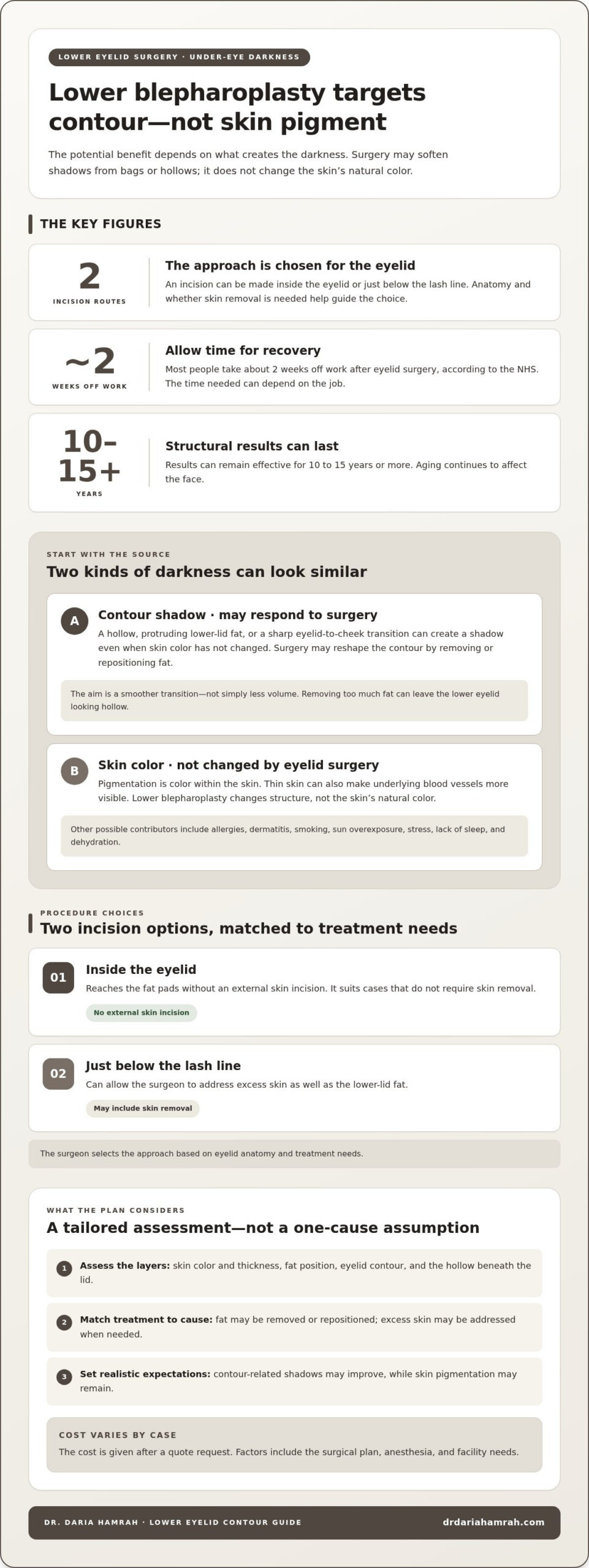
Lower blepharoplasty reshapes the lower eyelid to address structural shadows, eye bags, and selected skin changes. Its value depends on whether the darkness comes from contour or skin pigment.
Hollows and Structural Dark Circles
Structural dark circles are shadows created by hollows, protruding fat, or an abrupt transition between the lower eyelid and cheek. A hollow catches light differently from the surrounding skin, making the area appear darker even when its color hasn’t changed. Lower eyelid fat can sometimes be repositioned toward the hollow to soften the contour.
Who is a good candidate for blepharoplasty for under-eye dark circles? Someone in good overall health whose darkness is linked to lower-lid bags, hollowness, or a sharp eyelid-cheek transition may be a candidate. Surgery treats contour, not skin pigment, so identifying the source helps set realistic goals.
Fat Protrusion and Loose Skin
Fat protrusion occurs when lower-lid fat pushes forward, creating eye bags and a shadow beneath them. Lower blepharoplasty can remove or reposition excess fat; if loose skin also contributes, the plan may include removing excess skin. Balance matters: removing too much fat can leave the lower eyelid looking hollow, so the aim is a smoother transition, not simply less volume.
Blepharoplasty for dark circles under the eyes is most relevant when the darkness follows an uneven contour. If the skin itself is pigmented, changing the fat position won’t change its color. Separating these causes clarifies what surgery can and cannot address.
Incision Options and Procedure Steps
Lower eyelid surgery uses an incision inside the eyelid or just below the lash line. The inside approach reaches the fat pads without an external skin incision and suits cases that don’t require skin removal; the below-lash-line approach can also allow excess skin removal. The surgeon chooses the approach based on eyelid anatomy and treatment needs.
What are the steps involved in lower eyelid blepharoplasty? The surgeon assesses the eyelid and skin, selects an incision, then removes or repositions fat and addresses excess skin when needed. What is the recovery time for lower blepharoplasty? Most people take about 2 weeks off work to recover from eyelid surgery, depending on their job, according to NHS.
Results can remain effective for 10 to 15 years or more, although aging continues to affect the face. The change is structural, so its longevity differs from treatments that require maintenance. Healing and visible changes unfold over time, making recovery planning part of the decision.
Cost depends on the case and is given after a quote request; factors include the surgical plan, anesthesia, and facility needs. A thoughtful assessment weighs the lower eyelid’s fat, skin, and contour together. That distinction helps clarify whether surgery addresses the concern, rather than treating every dark circle as the same problem.
What are the causes of dark circles under the eyes?
Dark circles can reflect a change in skin color, a hollow contour, or a shadow from under-eye bags. Distinguishing these causes matters because surgery addresses structure, not every source of darkness.
Structural Causes of Dark Circles
Structural dark circles arise when the lower eyelid’s shape creates a hollow, bulge, or uneven transition that casts a shadow. A tear trough beneath a protruding fat pad can make the area appear darker, even when pigmentation hasn’t changed.
Volume loss and reduced collagen beneath the eye can deepen a hollow. Aging can make these contours more noticeable, while inherited facial structure may shape them earlier. The distinction matters because surgery may improve contour-related shadows, but not discoloration within the skin.
Pigmentation and Causes Surgery May Not Address
Pigmentation is color within the skin, rather than darkness created by the eyelid’s contour. It can be genetic and is more common among people with darker skin. Thin under-eye skin can also make underlying blood vessels more visible, creating a darker appearance without a distinct hollow.
Other causes include allergies, dermatitis, smoking, sun overexposure, stress, lack of sleep, and dehydration. Some causes of discoloration or puffiness may not improve with an eyelid incision. If pigment is the main concern, lower eyelid surgery may leave that color unchanged.
Under-Eye Bags and Sagging Skin
Under-eye bags are usually associated with protruding fat or fluid retention, while dark circles may come from pigment, thin skin, or hollowing. Aging commonly contributes to bags and shadows as supporting tissue changes and collagen beneath the skin becomes less prominent.
These features can overlap. A fat pad may project forward while a hollow sits below it, creating both a bag and a deep shadow. Loose skin can add a creased or sagging appearance, so identifying each feature helps clarify what surgery could address.
Patterns offer useful clues, though they don’t establish a diagnosis. A shadow that changes with facial angle or lighting may be linked to contour; a relatively consistent brownish area may point toward pigmentation. Puffiness that varies can be associated with fluid retention or allergies, while persistent bags can reflect fat protrusion or age-related changes.
Consider the lower eyelid in layers: skin color, skin thickness, fat position, and the hollow beneath the lid. More than one cause may be present at once. For example, someone may have inherited pigmentation alongside age-related fat bulging, so structural surgery could improve the shadow while leaving some darkness.
This distinction sets realistic expectations for treatment. Surgery may change the contour that creates a shadow, but it doesn’t remove genetic pigmentation or address allergies, sleep loss, or dehydration. Understanding which causes are present helps explain why the same procedure can produce different visible changes for different people.
Can Surgery Remove Dark Circles?
Lower eyelid surgery can improve darkness caused by bags and contour shadows, but it doesn’t change skin pigment. The surgical plan depends on whether excess fat, a hollow, or both shape the under-eye area.
Removing or Repositioning Eyelid Fat
Lower blepharoplasty can remove excess fat or reposition it to smooth the transition between the eyelid and cheek. The choice matters because removing too much fat can leave the under-eye area looking hollow, while preserving or shifting fat can maintain volume.
With a transconjunctival approach, the surgeon reaches lower-lid fat through an incision inside the eyelid. This can suit someone whose concern is puffiness and who doesn’t need excess skin removed. If skin removal is needed, an incision just below the lash line can provide access to address it.
What is the difference between lower blepharoplasty and tear trough filler for dark circles? Blepharoplasty is surgery that reshapes or repositions eyelid fat; filler is an injectable option intended to restore volume in hollows. They address contour in different ways, and neither changes pigmentation in the skin.
Fat Repositioning and Tear Trough Injections
Fat repositioning moves lower-eyelid fat toward the tear trough, the hollow below the lid, to soften a sharp contour. It can address a protruding fat pad and the hollow beneath it as parts of one connected shape, rather than simply removing volume.
Fat grafting is another way to add volume to an under-eye hollow when little fat protrudes. It uses transferred fat, while tear trough filler adds volume by injection. Anatomy and the source of the shadow guide the choice: a bulging pad and an isolated hollow call for different considerations.
Filler can restore depleted volume, but it doesn’t remove an eyelid fat bag. Conversely, removing a bag alone may not fill the trough beneath it. This distinction helps clarify whether the goal is less projection, more support, or a smoother contour.
Dark Circle Improvement With Surgery
Lower blepharoplasty can improve dark circles when protruding fat or a hollow creates the shadow. Can lower blepharoplasty improve dark circles under the eyes? Yes, when their appearance comes from lower-lid shape and light falling across an uneven contour; surgery cannot change the skin’s own pigment.
For example, someone with both a fat bulge and a tear-trough hollow may benefit from a plan that redistributes fat. Someone whose main concern is brown pigmentation may see little change from reshaping the eyelid alone. With mixed causes, surgery may address the shadow while discoloration remains.
The objective is a balanced eyelid-cheek contour, not maximal fat removal. During assessment, the surgeon considers fat position, hollowing, excess skin, and whether the incision should be inside the eyelid or below the lashes. These details connect the technique to the actual cause of darkness.
Choosing a surgeon
Choosing a surgeon for lower eyelid surgery means matching their experience to the cause of your concern. A consultation should address your goals, the expected change in appearance, and the procedure’s benefits and risks.
Start with credentials and relevant surgical experience. A board-certified plastic surgeon experienced in transconjunctival lower blepharoplasty and fat grafting around the eyes can assess both eyelid bags and hollows. Ask how the proposed approach relates to your anatomy: an incision inside the eyelid, for example, differs from one below the lash line when excess skin needs attention.
A surgeon with a focus on eyelids and surrounding eye structures may be relevant when the concern involves eyelid position, eye comfort, or the relationship between the lid and nearby tissues. Compare the explanation of your specific anatomy and surgical plan, rather than relying on a title alone.
Use the consultation to clarify what surgery can and cannot change. If a fat bulge casts a shadow, lower blepharoplasty can address that structural feature. If skin pigmentation is the main cause, removing or repositioning fat won’t change the skin’s color. A clear plan should distinguish these outcomes and explain whether it addresses excess skin, fat, or hollowing.
Discuss benefits alongside risks. Lower eyelid surgery can improve bags and contour-related shadows, but temporary swelling, bruising, or dry eyes can occur. Less common complications include asymmetry, scarring, and difficulty fully closing the eyes during healing. Ask how the surgical approach relates to these risks, what recovery involves, and which changes are realistic for your eyelid structure.
Consider non-surgical approaches when the main concern is skin color, texture, or volume rather than protruding fat. Options can include topical treatments with a dermatologist, laser treatment, microneedling with platelet-rich plasma, or fillers for selected hollows. These methods address different features and don’t replace surgery for excess fat or loose skin. A treatment plan should match the method to the cause.
Before deciding, make sure the discussion covers your goals, health, and alternatives, not just a proposed procedure. For example, someone bothered by pigmentation and mild puffiness may need a different plan from someone whose lower-lid bags create a distinct shadow. A clear conversation explains which feature each treatment targets and what it leaves unchanged.
Bring specific questions about the incision, fat removal or repositioning, skin removal, recovery, and possible complications. The surgeon’s answers should help you understand how the plan fits your eyelids and desired appearance. That detail gives you a sound basis for weighing cosmetic benefits against the commitment and risks of surgery.
Eye bags versus dark circles
Eye bags describe puffiness or protrusion beneath the lower eyelid; dark circles describe an area that looks darker than the surrounding skin. They can appear together, but they aren’t interchangeable. The distinction matters because a treatment aimed at excess fat won’t correct every cause of under-eye darkness.
Look at the contour first. A raised fat pad can cast a shadow onto the skin below it, especially where the lower eyelid meets the cheek. A hollow beneath that pad can deepen the contrast. In this case, the darkness comes partly from facial structure, not only skin color.
By contrast, pigmentation is color within the skin. It can remain visible even when the lower eyelid has a smooth contour and no noticeable puffiness. Thin skin can also reveal underlying blood vessels, creating a darker appearance without a prominent bag. Surgery changes eyelid structure, not the skin’s natural pigment.
Swelling adds another layer. Fluid retention or allergies can make the eye area look temporarily puffy, while persistent fat protrusion creates a more stable contour. Notice whether the appearance changes with swelling or remains as a defined bulge. That observation can help frame a consultation, but it doesn’t identify the cause by itself.
Mixed concerns are common: someone may have a lower-lid fat pad, a hollow beneath it, and pigmentation at the same time. Treating the fat can soften a structural shadow, yet some skin discoloration may remain. This is why the goal should be precise, such as reducing a visible bag or improving a shadow, rather than simply “removing dark circles.”
A consultation can connect the visible feature to the appropriate treatment category. Excess fat and loose skin are structural concerns considered in lower eyelid surgery. Pigmentation or skin texture calls for a different discussion, including dermatologist-directed topical care or laser treatment. Fillers address selected hollows, not protruding fat bags, and each option has distinct limits.
For a clearer assessment, describe what you notice in the mirror: a consistent brown tone, a hollow, a bulge, or puffiness that varies. Then explain which change matters most to you. These observations help distinguish a facial contour concern from a skin-color concern and keep expectations aligned with what each approach addresses.
If you’re weighing options for under-eye bags or shadows, explore under-eye treatment options and consider how the proposed approach matches the feature you want to change.
Dr. Daria Hamrah: Deep Plane Facelift (Longevity Facelift)
The Deep Plane Facelift (Longevity Facelift) is an option for people whose facial rejuvenation goals extend beyond the under-eye area. It isn’t a treatment for skin pigmentation or isolated lower-eyelid bags, so the cause of your concern should guide the next step.
Dr. Daria Hamrah is a board-certified facial cosmetic surgeon who offers blepharoplasty and the Deep Plane Facelift (Longevity Facelift). A consultation can help clarify whether your goals focus on the eyelids alone or broader facial rejuvenation, and which approach aligns with them.
For an individualized discussion of your facial rejuvenation goals, contact Dr. Daria Hamrah.
Choose a Next Step That Fits Your Goals
Your next step can be a focused conversation about what you want to change and what matters most to you. Choosing blepharoplasty for dark circles under the eyes begins with matching treatment to the concern, whether it’s eyelid contour or a broader facial goal. Your anatomy and priorities help shape the discussion.
Dr. Daria Hamrah offers blepharoplasty alongside facial procedures and treatments, including the Deep Plane Facelift (Longevity Facelift), rhinoplasty, and Botox. If your goals extend beyond the under-eye area, discussing the full picture can help you consider how different concerns relate, without assuming they need the same approach.
A consultation can clarify which options align with your desired changes and which concerns call for a different treatment path. There’s no need to rush the decision. A thoughtful plan starts with clear expectations and an understanding of what each approach can address.
Contact Dr. Daria Hamrah to discuss your goals and possible next steps. Take the time you need to make an informed choice that feels right for you.
Frequently Asked Questions
How long do lower blepharoplasty results last?
Lower blepharoplasty results can remain effective for 10 to 15 years or more, although aging continues. Changes in surrounding skin and facial support may gradually affect the appearance over time. For example, surgery may smooth a contour caused by lower-lid fat, while later changes in skin tone or texture can still influence how the area looks. Long-term expectations depend partly on which features the procedure addresses.
How much does lower eyelid surgery cost?
The price depends on the case and is provided through an instant, personalized estimate with no commitment. Factors include the surgical plan, whether excess skin or fat needs treatment, and anesthesia and facility requirements. A plan focused on fat repositioning may differ from one that also addresses loose skin. These details shape the estimate, so a general industry figure may not reflect an individual surgical plan.
What are the possible complications of eye bag surgery?
Possible complications include temporary swelling, bruising, and dry eyes. Less common issues include asymmetry, scarring, or difficulty fully closing the eyes during healing. These effects differ in severity and timing, so discuss how they relate to the planned incision and eyelid anatomy. For example, raise concerns about eye dryness before surgery, especially if it already affects daily comfort.
Does Eyelid Surgery Get Rid of Dark Shadows?
Eyelid surgery can reduce shadows created by lower-lid bags or an uneven eyelid-cheek contour. It won’t remove shadows caused primarily by skin pigmentation. Notice how the appearance changes under different lighting: a contour shadow may become more pronounced from one angle, while pigment remains visible across settings. This observation can help focus a consultation, though an examination is needed to assess the source.
How long does the procedure take?
Lower eyelid blepharoplasty generally takes 60 to 90 minutes, depending on surgical complexity. A more extensive procedure can take up to two-and-a-half hours. The time depends on the work planned, such as whether the surgeon will address excess skin as well as fat. Ask how the planned steps affect the expected time in the operating room and any arrangements needed for the day.
The Benefits of Lower-Eyelid Blepharoplasty?
Lower-eyelid blepharoplasty can improve the appearance of bags and shadows linked to fat position or excess skin. A smoother eyelid-cheek transition may make the area look less puffy or tired. The benefit is structural, so the procedure is most relevant when contour is the concern. It won’t address every cause of under-eye darkness, making it essential to define the desired change before considering surgery.
What causes dark circles that blepharoplasty can and cannot treat?
Blepharoplasty may improve dark circles caused by protruding fat, hollowness, or shadows from the lower eyelid’s shape. It cannot change pigmentation within the skin. Genetics, thin skin, allergies, dermatitis, sun exposure, smoking, stress, and lack of sleep can also contribute. If causes overlap, surgery may address contour while another treatment approach is needed for skin color or allergy-related symptoms.
What are the risks and complications of lower blepharoplasty?
Risks include temporary swelling, bruising, or dry eyes, with less common complications such as asymmetry, scarring, and difficulty fully closing the eyes during healing. Good overall health is an important factor when assessing suitability. Discuss your health, goals, realistic outcomes, benefits, and risks with your surgeon. This conversation can also clarify how the planned technique relates to your eyelid structure and recovery needs.