
Rhinoplasty reshapes the nose to support facial balance, address specific appearance goals, and, when needed, improve breathing. The most thoughtful aesthetic rhinoplasty goals are shaped by your facial features and personal preferences, while keeping nasal function in view. A successful plan isn’t about pursuing one universal ideal; it’s about considering how the nose works with the rest of your face.
It’s natural to want a clear idea of what might change, especially when a small adjustment can influence your overall appearance. Because the nose is three-dimensional, changes to its bridge, tip, or nostrils can affect both facial appearance and airflow.
This article covers common aesthetic and functional goals, how facial proportions and cultural background can inform an individual plan, and what visual previews can and can’t show. It also explains how skin and nasal structure shape realistic possibilities, and why discussing your priorities and the limits of surgery can help align expectations.
Key Takeaways
- Common goals include refining the bridge, tip, nostrils, or asymmetry while keeping the nose proportionate to the face.
- Cultural preferences and individual anatomy help shape a plan; a single beauty standard can’t define the right result for everyone.
- Use a digital preview to discuss possibilities and priorities, not as a guarantee of the surgical outcome.
- Breathing needs matter alongside appearance, since structural changes can affect both nasal function and visual balance.
- Bring specific concerns and priorities to your consultation so you can discuss which changes are realistic and what trade-offs they may involve.
What are the most common functional and aesthetic goals for a rhinoplasty?
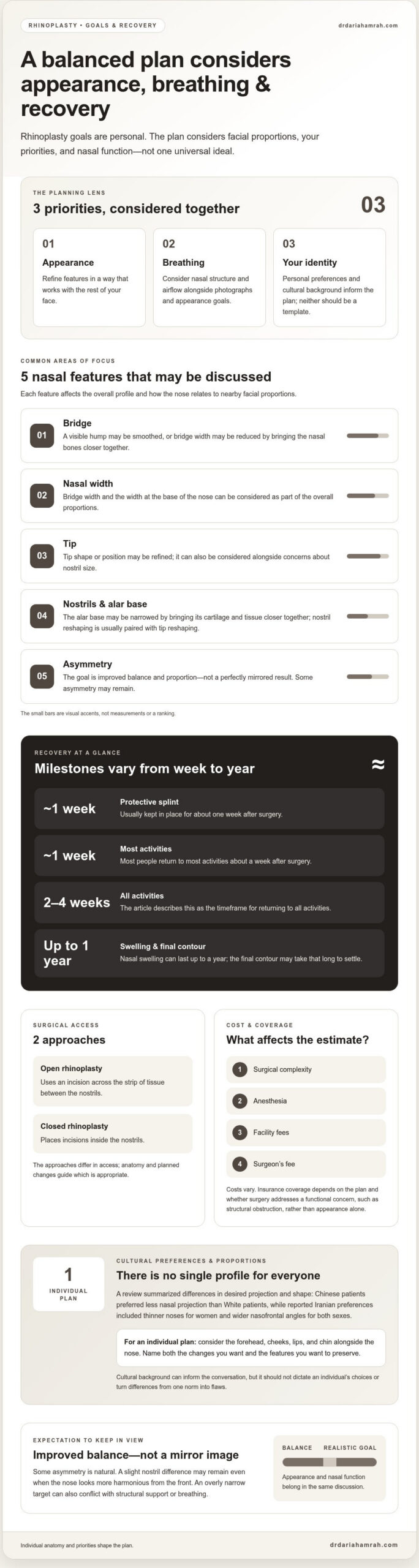
Rhinoplasty can refine the nasal bridge, width, tip, nostrils, or visible asymmetry, and may also address structural breathing concerns. A personal plan takes into account facial proportions, cultural preferences, and the changes you want.
Cultural Influences on Nasal Preferences
Nasal preferences vary across cultural and ethnic backgrounds, so no single profile represents a universal ideal. A review summarized differences in desired projection and shape: Chinese patients preferred less nasal projection than White patients, while reported Iranian preferences included thinner noses for women and wider nasofrontal angles for both sexes.
These differences matter because planning should reflect your features and preferences, not treat departure from one cultural norm as a flaw. A review of studies published since 2000 emphasizes that community ideals are shaped partly by familiarity with shared features. Naming what you want to change and preserve can help clarify the goal.
Nasal Features and Proportions
Common goals include changing the bridge, nasal width, tip, nostrils, or the angle between the nose and upper lip. Rhinoplasty may smooth a visible bridge hump, refine tip shape or position, or reduce bridge width by bringing the nasal bones closer together. The alar base can also be narrowed by bringing its cartilage and tissue closer together.
Each feature affects the overall profile. If you’re concerned about nostril size, you may also want to discuss tip shape, since nostril reshaping is usually performed alongside tip reshaping. The angle between the nose and upper lip also influences the side view, so planning considers the lip and surrounding facial proportions.
Symmetry and Realistic Expectations
Symmetry describes how balanced features appear from side to side, but some asymmetry is natural. Rhinoplasty can address nasal asymmetry, though a realistic goal is improved balance and proportion, not a perfectly mirrored result. For example, a slight difference between nostrils may remain even when the nose looks more harmonious from the front.
Describe specific concerns, such as a tip that looks off-center or a bridge that appears uneven in photographs. These details help identify which features matter most and how they relate to your face. An overly narrow target can conflict with structural support or breathing, so appearance and function belong in the same discussion.
Breathing and Airway Goals
Breathing is an important functional goal because nasal airflow affects comfort during sleep and exercise. If your airway feels obstructed, the assessment should consider nasal structure and airflow, not just photographs. For example, a deviated septum may be addressed by adjusting nasal structure to improve alignment.
Open rhinoplasty uses an incision across the strip of tissue between the nostrils, while closed rhinoplasty places incisions inside the nostrils. The approaches differ in surgical access; your anatomy and the planned changes guide which approach is appropriate.
Rhinoplasty costs in the United States vary with factors such as surgical complexity, anesthesia, facility fees, and the surgeon’s fee. An individualized estimate follows a review of your case with Dr. Daria Hamrah. Insurance coverage depends on your plan and whether surgery addresses a functional concern, such as structural obstruction, rather than appearance alone.
Most people return to most activities about a week after surgery and to all activities in 2 to 4 weeks. A protective splint is usually kept in place for about one week after surgery. Nasal swelling can last up to a year, so the final contour may take that long to settle.
Individualized goals based on facial features and ethnicity
An individualized plan considers your facial features, cultural identity, and desired changes. The aim is to understand how nasal proportions relate to your face, not to impose one preferred shape.
Balancing the Nose with Facial Features
Facial balance means considering the nose alongside features such as the forehead, cheeks, lips, and chin. Changing one area can alter how nearby proportions appear. For instance, a bridge that seems prominent in profile may look different when considered with the chin and forehead. Discussing several views can help clarify which change matters to you.
Facial self-construction describes how people express identity through appearance and personal choices. Cultural background can influence which nasal features feel familiar or desirable, while individual preference remains central. A review of nasal aesthetic preferences recommends recognizing koinophilia, or “love of the average,” within a community. This helps explain how shared ideals can shape preferences without dictating what any individual should choose.
Ethnic background should inform the conversation, not serve as a template. The review argues that aesthetic planning should respect a patient’s cultural and ethnic features rather than treat differences from a White norm as defects. For example, you may want a subtle bridge refinement while preserving features that connect your appearance with family or heritage. Naming both the change you want and the features you want to preserve helps clarify priorities.
Symmetry and Facial Harmony
Facial harmony describes how features work together, while symmetry concerns how closely the two sides appear balanced. A nose can look more proportionate without being identical on each side. Since every face has some asymmetry, a realistic goal is improved balance, not a mirror image. This distinction keeps expectations focused on the face as a whole.
Consider your nose from the front, profile, and three-quarter view. A bridge that looks straight from the front may appear different in profile, while a small tip deviation can influence the overall impression. The face is often described in upper, middle, and lower parts. This framework offers a simple way to discuss how the nose sits within the middle portion and relates to the forehead and lower face.
Individual proportions also depend on underlying structure. The nasal septum, cartilage, and bones support the visible shape, so planning can consider how they relate to your desired contour. Sometimes a concern described as “too wide” is specifically about the bridge, tip, or nostril base. Identifying the area helps distinguish a focused preference from a broader wish for change.
For a discussion centered on how nasal structure relates to facial proportions, explore individualized rhinoplasty planning.
Can I see what my nose might look like after surgery?
Yes. Three-dimensional imaging software can provide a virtual simulation of potential rhinoplasty results during planning. The preview helps you discuss cosmetic preferences, but it cannot accurately represent the surgical result. Use it as a visual aid to communicate priorities, not as a promise of an exact postoperative appearance.
Use the image to identify what you want to understand more clearly. You might compare the bridge from the side, the tip from the front, or nostril width in a three-quarter view. Ask how a proposed change relates to your facial proportions and nasal structure. A useful discussion connects each visible adjustment with a specific goal, such as softening the bridge contour or refining the tip.
Choosing a nose shape and size starts with describing what you want to change and preserve. “Smaller” might mean a lower bridge, a narrower tip, or less nostril show, and each involves different structures. Rhinoplasty reshapes underlying nasal structure rather than removing nasal skin. Clear examples help distinguish a preferred profile from a general wish for a different nose.
Choosing an experienced surgeon matters because the nose is a complex three-dimensional structure, and small changes can affect appearance and function. Discuss how the plan addresses your nasal anatomy, including cartilage and the nasal framework, rather than focusing only on the simulation. If breathing is a concern, explain when obstruction occurs and whether it affects sleep, exercise, or daily comfort.
Ask what the preview illustrates and what it leaves out. A digital image can help compare a smoother bridge with a more prominent one, but it cannot reproduce every detail of healing or tissue behavior. Thick nasal skin can make significant visible changes difficult, while thin skin can reveal even small changes. These differences shape how an adjustment may appear externally.
Experience matters in complex cases. Revision rhinoplasty, which addresses issues after an initial procedure, may involve ongoing aesthetic concerns, functional problems, or complications. This surgery can be challenging and calls for a skilled, experienced surgeon. In a consultation, discuss prior procedures, breathing concerns, and the specific outcome you hope to achieve.
Before deciding, use the preview to guide a focused conversation: name the feature, describe the change, and ask how it relates to breathing and facial balance. This makes the image a planning tool while keeping the surgical plan grounded in anatomy and realistic limits.
Discussing goals and limitations with a surgeon
Rhinoplasty planning typically starts with discussing your priorities, then assessing nasal structure, breathing, and facial proportions before agreeing on a surgical plan. During surgery, the surgeon reshapes underlying structures to address the agreed goals while considering nasal function.
Be specific about the change you want. Instead of saying “make my nose smaller,” explain whether you mean the bridge, tip, or nostrils. If your main concern is a profile hump, describe how it looks from the side; if breathing feels restricted, explain when you notice it. Clear examples connect your desired outcome with the anatomy involved.
Ask how a proposed change could affect other features. Over-reducing the middle part of the nose can restrict breathing and make the tip appear larger. This trade-off is one reason to discuss aesthetic preferences and functional priorities together. A change that looks small in a photograph can alter structural support or the balance of your profile.
Some patients may benefit from rhinoplasty and chin augmentation together to support their desired facial balance. That doesn’t mean both procedures are necessary: the chin can influence how the nose looks in profile. Discussing this relationship can help clarify whether your concern is truly nasal or whether another proportion shapes the impression you notice.
Preparation begins with an honest account of your goals, health concerns, and previous nasal procedures. Bring photographs that illustrate the bridge or tip you have in mind, but explain which details matter instead of treating an image as a template. If you’ve had previous surgery, share what changed and whether breathing or appearance remains a concern.
During recovery, follow the care instructions for dressings and protection. Internal bandages usually remain in place for 1 to 7 days after surgery, and a supportive splint is usually kept on the nose for about one week after surgery. These supports protect the healing structure while early swelling changes the appearance of the nose.
Sun protection is another practical part of recovery. Use SPF 30 sunscreen when outdoors, especially on the nose, as advised for people recovering from rhinoplasty. The bridge and tip are exposed areas, so include them when applying protection. Avoid treating early appearance as the final outcome, since nasal swelling can last up to a year.
Planning also means discussing what you want to preserve. For example, you may want a lower bridge while keeping a recognizable profile or avoiding narrowing that affects airflow. Name your priority, ask how the plan addresses it, and discuss how appearance and function will be balanced. This turns broad preferences into a focused surgical objective.
Patients’ aesthetic rhinoplasty goals
Patients often describe a desired change in everyday terms: a smoother profile, a more defined tip, or a nose that feels more balanced with their features. Aesthetic rhinoplasty goals mean different things to different people. Start by naming the feature that draws your attention and explaining how you want your appearance to feel different.
Preferences also vary across communities. Studies reported that 60%-100% of female patients in Singapore, Thailand, Korea, and Malaysia requested noses with greater dorsal height. That finding describes preferences in those patient groups, not a universal standard or a goal that suits every person. Your own desired bridge shape should be considered alongside your facial anatomy and cultural identity.
Some patients focus on one visible feature; others want a broader change. For example, you may want less prominence in profile, while someone else may prioritize a tip that looks more defined from the front. Naming the view where you notice the concern makes the goal more precise and helps distinguish a specific change from a general wish to look different.
Rhinoplasty planning benefits from separating priorities into “change,” “preserve,” and “function.” You might want to soften a bridge contour, preserve a feature associated with your family, and maintain comfortable nasal breathing. This simple framework structures the conversation and makes trade-offs easier to discuss if a requested appearance conflicts with structural support or airflow.
Anatomy shapes what a goal means in practice. The nasal tip is supported by cartilage, while the bridge, septum, skin, and surrounding tissue also influence the visible result. A request for a narrower tip involves different structures than a request for a lower bridge. Connecting your desired appearance to the relevant anatomy helps keep expectations focused and specific.
Your preferences may become clearer as you think them through. “I want a smaller nose” might become “I want the bridge less prominent in profile, but I want my tip to remain natural.” That description gives a clearer target than relying on a celebrity photograph alone. A reference image can illustrate a preference, but planning should reflect your own facial proportions and features.
The central takeaway is to define success in personal terms: identify the feature, the view where it concerns you, and what you want preserved. A balanced plan considers appearance and function together. To discuss goals grounded in your facial anatomy, schedule a rhinoplasty consultation.
Dr. Daria Hamrah: Deep Plane Facelift (Longevity Facelift)
Dr. Daria Hamrah offers the Deep Plane Facelift (Longevity Facelift) for patients exploring facial rejuvenation. For concerns about nasal shape or breathing, rhinoplasty is the relevant next step. A consultation can focus on your priorities, facial anatomy, and how aesthetic goals relate to nasal function.
Dr. Hamrah is a board-certified facial cosmetic surgeon specializing in surgical and non-surgical facial rejuvenation. If you’re considering rhinoplasty, bring specific concerns, such as bridge shape, tip definition, or airflow, to guide a focused discussion about possible approaches and realistic limits.
Contact Dr. Daria Hamrah to discuss whether rhinoplasty aligns with your goals.
Make Your Next Step a Thoughtful One
The most useful next step is to turn a general preference into a clearly defined personal goal. Before a consultation, consider what you hope to change, what you want to preserve, and how nasal function fits into your priorities. This reflection can make your aesthetic rhinoplasty goals more specific and give the conversation a meaningful starting point.
You don’t need to arrive with a perfect description or a fixed image of the outcome. A focused discussion can connect your concerns with your anatomy, clarify which changes align with your priorities, and identify important limits. The aim is an informed decision that reflects your features and values, not an outside standard of beauty.
Dr. Daria Hamrah offers rhinoplasty, alongside other facial rejuvenation options such as the Deep Plane Facelift (Longevity Facelift) and Botox. If you’re ready to discuss your priorities and explore whether rhinoplasty fits them, contact Dr. Daria Hamrah to discuss your goals. A considered conversation is a positive first step toward a plan that feels personal and well informed.
Frequently Asked Questions
What is rhinoplasty?
Rhinoplasty is surgery that changes the shape or structure of the nose. People may consider it to address appearance, nasal function, or both. For example, a plan might refine the visible bridge while also addressing a structural issue that affects airflow. The procedure is tailored to nasal anatomy and the person’s priorities, so it doesn’t follow one standard design for every patient.
Are there risks?
Yes. Potential concerns include complications, changes that don’t match your priorities, or breathing problems if structural support is compromised. For example, over-reducing the middle of the nose can restrict airflow. Healing also affects how the nose looks over time, and revision surgery may be considered for persistent aesthetic or functional issues. Discussing intended changes and trade-offs helps you understand the risks relevant to your plan.
What are the main aesthetic goals of rhinoplasty?
Common goals include refining the bridge, adjusting nasal width, reshaping the tip or nostrils, and improving visible asymmetry. Well-defined aesthetic rhinoplasty goals describe a specific change, such as wanting a smoother side profile while keeping the tip’s character. You can also identify what you want to preserve. This makes the desired outcome more personal than simply asking for a smaller or more fashionable nose.
How do facial proportions and features guide rhinoplasty planning?
Facial proportions help show how a proposed nasal change may affect your face as a whole. A bridge that seems prominent in profile, for example, may look different alongside the forehead and chin. Skin thickness and the shape of underlying cartilage also influence how structural changes appear. Considering front, side, and angled views can help distinguish a concern about one feature from a broader preference for facial balance.
What nose shape goals are realistic for different face shapes and ethnic backgrounds?
Realistic goals reflect a person’s anatomy, preferences, and cultural identity, not a fixed nose shape for each face type or background. You might want a more refined bridge while preserving features that feel connected to family heritage. Skin characteristics and nasal structure also affect how changes appear externally. A reference photo can help describe a preference, but it cannot serve as an exact template.
How do patients and surgeons set expectations before rhinoplasty?
Patients and surgeons set expectations by translating broad wishes into specific priorities and discussing how anatomy may shape the plan. Name the feature you want to change, the view where it concerns you, and a feature you hope to preserve. Discuss potential trade-offs, including breathing and structural support. A digital simulation can support the discussion, but it isn’t an exact prediction of the surgical result.
What is the difference between open and closed rhinoplasty for achieving aesthetic goals?
Open rhinoplasty uses an incision across the tissue between the nostrils, while closed rhinoplasty places incisions inside the nostrils. The approaches differ in surgical access; anatomy and planned changes guide which one is appropriate.