
What if the most important part of facelift recovery begins before surgery? Knowing how to prepare for facelift recovery can make the experience feel more manageable, especially when you’re unsure what to arrange, how much help you’ll need, or what temporary swelling and discomfort may feel like.
Those concerns are understandable. Recovery differs from person to person and from one procedure to another. General advice can’t replace instructions tailored to your surgical plan, but thoughtful preparation can help you organize the practical details and know what questions to ask.
This guide covers how to prepare your home, plan support for daily responsibilities, and organize questions for your surgical team. It also explains why recovery timelines and instructions are individual. Dr. Daria Hamrah, a board-certified facial cosmetic surgeon specializing in the Deep Plane Facelift, approaches preparation as part of individualized care and long-term tissue health. A clear plan can help you feel more prepared for the days ahead.
Key Takeaways
- Learn how to prepare for facelift recovery with a practical plan that supports healing without promising a specific timeline or result.
- Keep medical decisions grounded in your surgeon’s instructions and organize questions before surgery.
- Plan transportation, a responsible support person, and help with everyday tasks according to your surgical team’s directions.
- Use online checklists as prompts for questions, not as a substitute for instructions tailored to your procedure.
- Personalized consultation and clear instructions can make recovery preparation more relevant to your surgical plan.
How to Prepare for Facelift Recovery Before Surgery
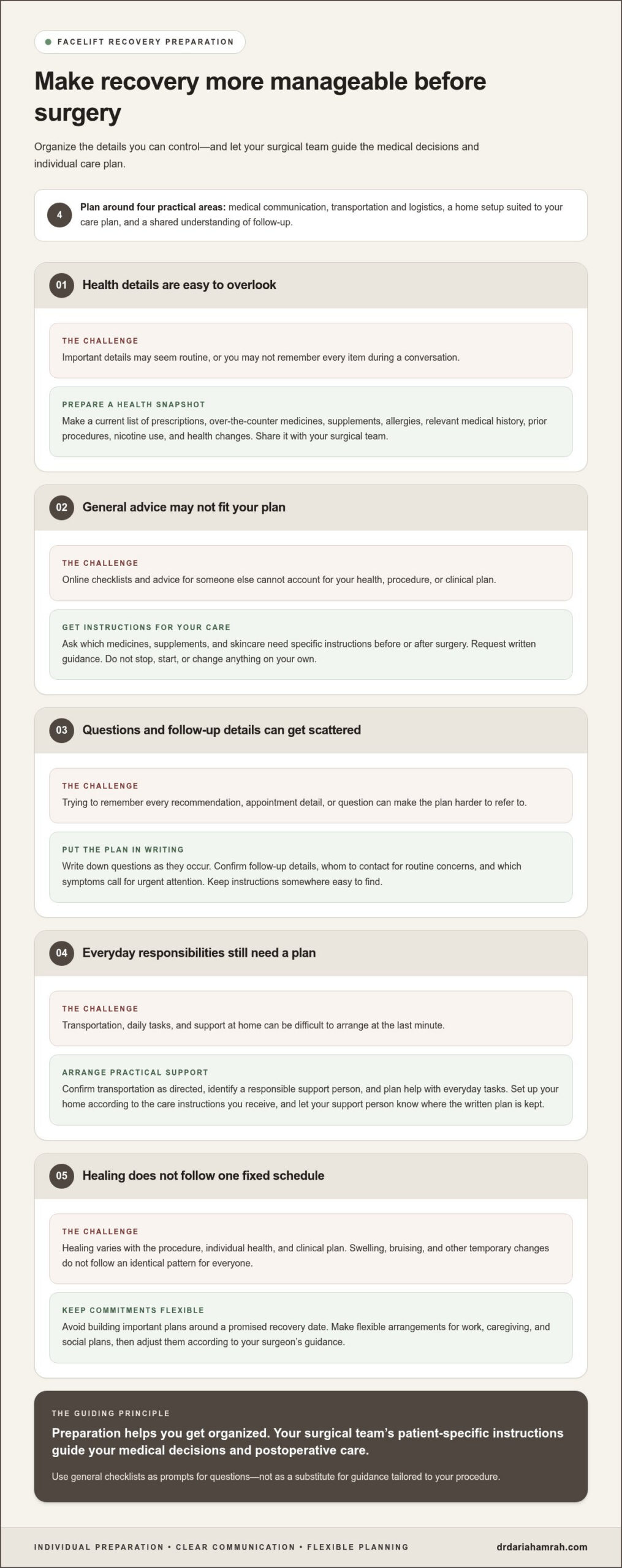
Recovery can feel easier to approach when practical arrangements are made in advance. Knowing how to prepare for facelift recovery means organizing the details you can control and leaving medical decisions to your surgical team. Preparation can support a more manageable experience, but it can’t guarantee a particular healing timeline or result.
Start with four areas: clear medical communication, transportation and other logistics, a home setup that fits your care plan, and a shared understanding of follow-up. Online checklists can help you think of questions, but they can’t account for your health, procedure, or clinical plan. Your surgeon’s individualized instructions take priority.
What should you discuss with your facelift surgeon beforehand?
Give your surgical team a complete, current picture of your health. Prepare a list of prescription medicines, over-the-counter medications, supplements, and allergies. Share relevant health changes, prior procedures, and nicotine use as well. Details that may seem routine can help your team tailor its guidance.
Ask which medicines or supplements need specific instructions before or after surgery. Don’t stop, start, or change anything on your own. Write down the team’s recommendations and questions that come up, so you can refer to them as you prepare.
Clarify practical expectations, too: how to arrange transportation, what support you’ll need at home, how follow-up will work, and how to reach the surgical team with questions. A written plan is easier to refer to than trying to remember every detail.
How can you set realistic expectations for recovery?
Healing varies with the procedure, individual health, and clinical plan. Swelling, bruising, and other temporary changes don’t follow an identical pattern for everyone, so avoid building important commitments around a promised date. Make flexible arrangements for work, caregiving, and social plans, then adjust them according to your surgeon’s guidance.
For general background on procedure terminology and different approaches, read this overview of facelift (rhytidectomy). If a Deep Plane Facelift is part of your discussion, the Deep Plane Facelift guide offers additional procedure context. Neither resource replaces instructions tailored to your care.
Before surgery, make your plan tangible: confirm transportation as directed, identify who can support you, prepare your home around the care instructions you receive, and note when and how follow-up will happen. Dr. Daria Hamrah specializes in advanced facial rejuvenation, with attention to individual planning and long-term tissue health. Clear communication helps make preparation personal rather than generic.
Build Your Facelift Recovery Plan Around Medical Guidance
A useful recovery plan turns general preparation into clear, personal steps. Your surgeon’s instructions govern medical decisions, including what to do with medicines, supplements, and skincare. Treat online checklists as prompts for questions, not as a substitute for your clinical plan.
General preparation helps you get organized; only your surgical team’s patient-specific instructions should guide your postoperative care.
Use this sequence to structure your planning:
- 1. Gather your health information. Make an up-to-date list of prescriptions, over-the-counter medicines, supplements, allergies, and relevant medical history.
- 2. Share changes promptly. Tell the clinical team about new symptoms, changes in your health, or updates to existing prescriptions.
- 3. Request specific instructions. Ask for written guidance on medicines, supplements, and skincare. Don’t stop or change anything independently.
- 4. Map out follow-up. Confirm appointment details, how follow-up is expected to work, and which contact channel to use for questions.
- 5. Make the plan accessible. Keep instructions somewhere easy to find, and let your designated support person know where they are.
Which health details should you share before surgery?
Accurate information helps your team tailor recommendations to your circumstances. Along with your medication and allergy list, include relevant medical history and recent changes. Ask which products or medicines need specific guidance before or after your procedure. Request instructions for your own plan rather than relying on advice intended for someone else.
How should you organize follow-up and questions?
Write down questions as they occur, then bring them to your clinical discussions. Confirm whom to contact for routine concerns and which symptoms call for urgent attention. Don’t rely on a general online list to make that distinction. A designated support person can review the written plan with you and help keep key instructions accessible while you rest.
For broader medical context, Mayo Clinic’s overview explains what to expect after a facelift. Use it as background while following your surgeon’s directions for your own recovery. That distinction is central to how to prepare for facelift recovery: learn enough to ask informed questions, then let individualized guidance shape the details.
Dr. Daria Hamrah is a board-certified facial cosmetic surgeon specializing in advanced facial rejuvenation, including the Deep Plane Facelift. Read more about Dr. Hamrah’s practice.
Prepare Your Home and Support System for Facelift Recovery
A well-organized home can reduce avoidable demands while you focus on following your care plan. When considering how to prepare for facelift recovery, think beyond supplies. Transportation, help with routine tasks, and flexibility in your schedule all contribute to a calmer environment.
What should you arrange for surgery day and afterward?
Confirm transportation and any accompaniment requirements with the practice. Make sure the person helping you understands the plan for getting home and knows where to find the clinic’s instructions and contact information. Follow the surgical team’s directions, since requirements can depend on your procedure and clinical plan.
Consider which everyday responsibilities could become difficult while you’re resting. Depending on your circumstances, arrange help with meals, errands, household tasks, or caregiving. Plan support around your needs and the guidance you receive rather than assuming everyone needs the same amount of assistance.
Keep your written care instructions and the appropriate contact information somewhere accessible to you and your support person. Knowing where to find them makes it easier to refer to guidance if a question arises.
How can you make your recovery space more comfortable?
Choose a clean, quiet place where you can rest without needing to move around often. Set it up to support the positioning advised by your surgeon, and keep practical, approved essentials within easy reach. These might include water, items prescribed or specifically recommended by your clinical team, and something restful to read or listen to.
Check that the space is comfortable for resting, and ask your team before adding devices, topical products, or other items to your recovery routine. Don’t assume a popular online recommendation is appropriate for your care plan.
Think through your schedule, too. Where possible, arrange work, caregiving, and household responsibilities with flexibility, since recovery needs differ from person to person. The American Society of Plastic Surgeons offers a general facelift recovery timeline for context, but your own surgeon’s instructions should guide your plans and activity.
Use this as a framework, not a fixed checklist. A supportive person, a thoughtfully arranged space, and room to adapt can make the practical side of recovery feel more manageable while your clinical team guides your care.
Facelift Recovery Preparation: Common Misconceptions and Safety Questions
Searching for recovery advice can help you think of questions, but a checklist written for a broad audience can’t account for your examination, health history, procedure, or surgical plan. Swelling, bruising, and the overall healing experience vary. Don’t treat a timeline describing one person’s recovery as a promise or a deadline for yours.
Recovery preparation is practical planning, not a substitute for medical care. The most useful plan helps you follow your own instructions and know how to reach your clinical team when something is unclear.
Can online recovery advice replace your surgeon’s instructions?
No. General online information may offer background, but it can’t assess your individual circumstances or determine which recommendations apply to you. Follow the written surgical and postoperative instructions provided by your team, even if a website or another person’s checklist suggests something different.
This is especially important for medicines, skincare, and activity. If online advice conflicts with your plan, don’t change anything based on a search result or discussion forum. Ask your clinical team and follow its guidance. Preparing for facelift recovery means knowing which advice is general and which instructions were created for your care.
What should you do if a concern develops?
Not every question signals a problem, but you shouldn’t have to decide alone whether a change in symptoms or healing needs attention. Use the contact pathway supplied by the practice and describe what you’ve noticed as clearly as you can. Your team can advise you on the appropriate next step.
Ask in advance which concerns can be handled through the routine contact process and which symptoms require prompt attention. If the team gives you instructions for urgent symptoms or an emergency, follow them. Don’t try to diagnose a complication from photos or online descriptions, and don’t assume a symptom is harmless because it appears on someone else’s recovery checklist.
Keep your written postoperative instructions and contact details accessible to you and your support person. If a new question comes up, use the practice’s stated process rather than relying on conflicting general recommendations. This helps make how to prepare for facelift recovery clearer: use online material to inform your questions, then rely on individualized clinical guidance for decisions.
For facial surgery information grounded in individualized care, read more about Dr. Hamrah’s facial surgery practice.
Make Facelift Recovery Preparation Part of Personalized Surgical Care
Preparation is more meaningful when it reflects your health, your goals, and the procedure being considered. A consultation gives you space to discuss those factors and understand how they shape the surgical plan and recovery guidance. That’s the difference between collecting generic tips and learning which steps are relevant to your care.
How does a personalized plan support informed preparation?
Your procedure and health context inform the instructions your clinical team provides. Use your consultation to discuss what you hope to address, any concerns or health changes, medicines and supplements, and the practical support available to you. These details make the conversation specific, so you can understand what to prepare for and what questions still need answers.
Dr. Daria Hamrah is a board-certified facial cosmetic surgeon specializing in advanced facial rejuvenation, including the Deep Plane Facelift, also called the Longevity Facelift. Her expertise provides context for individualized surgical planning, not a promise of a particular recovery course. For broader educational context on long-term tissue health, read this cellular health and skin longevity framework. No supplement or general wellness approach can guarantee healing; follow your clinical team’s recommendations for your care.
What is a useful next step if you are considering a facelift?
Bring your questions and current health information to a consultation. A thoughtful discussion can help clarify your goals, address concerns, and explain how your individual circumstances may shape candidacy, procedure planning, and recovery instructions. It’s also an opportunity to discuss practical needs, such as the support you can arrange and responsibilities that may require flexibility.
As you consider how to prepare for facelift recovery, remember that readiness isn’t measured by a perfect checklist. It comes from understanding the plan, knowing where your guidance comes from, and having the opportunity to ask questions before decisions are made.
If you’re considering facial surgery, a conversation with Dr. Hamrah can help you discuss your goals, readiness, and individual planning needs without assuming one approach or recovery experience fits everyone.
Prepare for Recovery With a Clear, Personal Plan
Knowing how to prepare for facelift recovery starts with practical planning, but your surgeon’s individualized instructions should guide medical decisions. Organize your health information, arrange transportation and support, and make room in your schedule for recovery needs that may vary from person to person.
A home-care plan can help you feel more prepared, but it can’t guarantee a particular timeline or result. Keep questions open, follow your clinical team’s guidance, and use the practice’s preferred contact process if concerns arise.
Dr. Daria Hamrah is a board-certified facial cosmetic surgeon whose practice specializes in the Deep Plane Facelift, also called the Longevity Facelift. If you’re considering facial surgery, explore personalized facelift care with Dr. Daria Hamrah and discuss your goals, readiness, and individual planning needs.
Thoughtful preparation is a meaningful first step. With clear guidance and support that fits your circumstances, you can approach the process with greater confidence.
Frequently Asked Questions
How far in advance should I prepare for facelift recovery?
Start planning as soon as your procedure is being considered, then use your surgical team’s schedule to guide the details. There’s no single preparation window that fits every patient or clinical plan. Early organization gives you time to share health information, ask about medicines and skincare, coordinate transportation and support, and adjust work or caregiving responsibilities without relying on a generic checklist.
What should I avoid before facelift surgery?
Don’t stop or change prescription medicines, over-the-counter medications, supplements, or skincare on your own. Ask your surgical team which items need specific instructions for your procedure. Share allergies, nicotine use, relevant health changes, and updates to prescriptions. Follow the team’s guidance about activities and other preparation steps, since advice can differ according to your health and surgical plan.
Do I need someone to stay with me after a facelift?
Arrange a responsible support person and transportation according to your surgical team’s directions. Your team will explain any accompaniment requirements and what support is appropriate for your care plan. You may also want help with meals, errands, household tasks, or caregiving while you focus on recovery. Plan support around your individual needs rather than assuming everyone needs assistance for the same length of time.
What should I have ready at home for facelift recovery?
Prepare a clean, restful space arranged to support the positioning your surgeon recommends. Keep water, written care instructions, contact information, and any prescribed or approved items within easy reach. You might also set aside quiet entertainment and coordinate help with routine household tasks. Avoid adding devices, topical products, or other recovery items based solely on online advice; ask your clinical team what fits your plan.
How long does facelift recovery take?
Recovery varies with the procedure, your health, and your clinical plan, so there isn’t one reliable timeline for everyone. Swelling, bruising, comfort, and readiness to return to activities can differ. Build flexibility into work and social commitments, and use follow-up appointments to discuss your progress. Your surgeon’s guidance is the best source for understanding what to expect at each stage of your recovery.
When should I contact my surgeon after a facelift?
Use the contact process provided by your surgical team if you have a question or notice a change in symptoms or healing. Before surgery, ask which concerns can follow the routine pathway and what instructions apply to urgent symptoms or emergencies. Follow that guidance rather than trying to diagnose a problem from online information or assuming a symptom is harmless. Keep contact details accessible to you and your support person.
If you’re considering a Deep Plane Facelift or another facial procedure, contact Dr. Daria Hamrah’s practice to discuss your goals and personalized surgical planning.