
Rhinoplasty for an aging nose can address changes such as a drooping tip, weakened cartilage, or a wider-looking nasal base. Aging does not automatically rule out surgery: there is no strict upper age limit, and candidacy depends on overall health, nasal structure, and goals.
If your nose seems longer or less supported than it once did, you may be noticing a real change. Nasal support can weaken over time, altering the nose’s appearance and, in some cases, affecting airflow.
This article explains why the nose changes with age, what rhinoplasty may address, and how surgeons assess long-term support alongside appearance. You’ll also learn how nasal surgery may fit into a broader facial rejuvenation plan, helping you understand the options and considerations behind an informed decision.
Key Takeaways
- Age can weaken nasal cartilage and change the tip, bridge, or width of the nose, whether or not you’ve had surgery before.
- Consider how appearance, breathing, overall health, and nasal support shape candidacy, rather than treating age alone as the deciding factor.
- Learn how structural support and cartilage grafts may help address a drooping tip while preserving the nose’s form and function.
- Compare nasal surgery with other facial procedures to understand how a personalized plan can address concerns across the face.
- Set realistic expectations: surgery can refine nasal contours and facial balance, but it can’t stop natural aging or change your underlying genetics.
Who Is a Good Candidate for Anti-Aging Rhinoplasty?
Good candidates seek changes to nasal shape or function and have goals that fit their anatomy. In the United States, cost depends on the surgical plan, facility, and anesthesia, and is provided after a quote request. Insurance coverage depends on the policy and whether treatment addresses a functional concern or appearance alone.
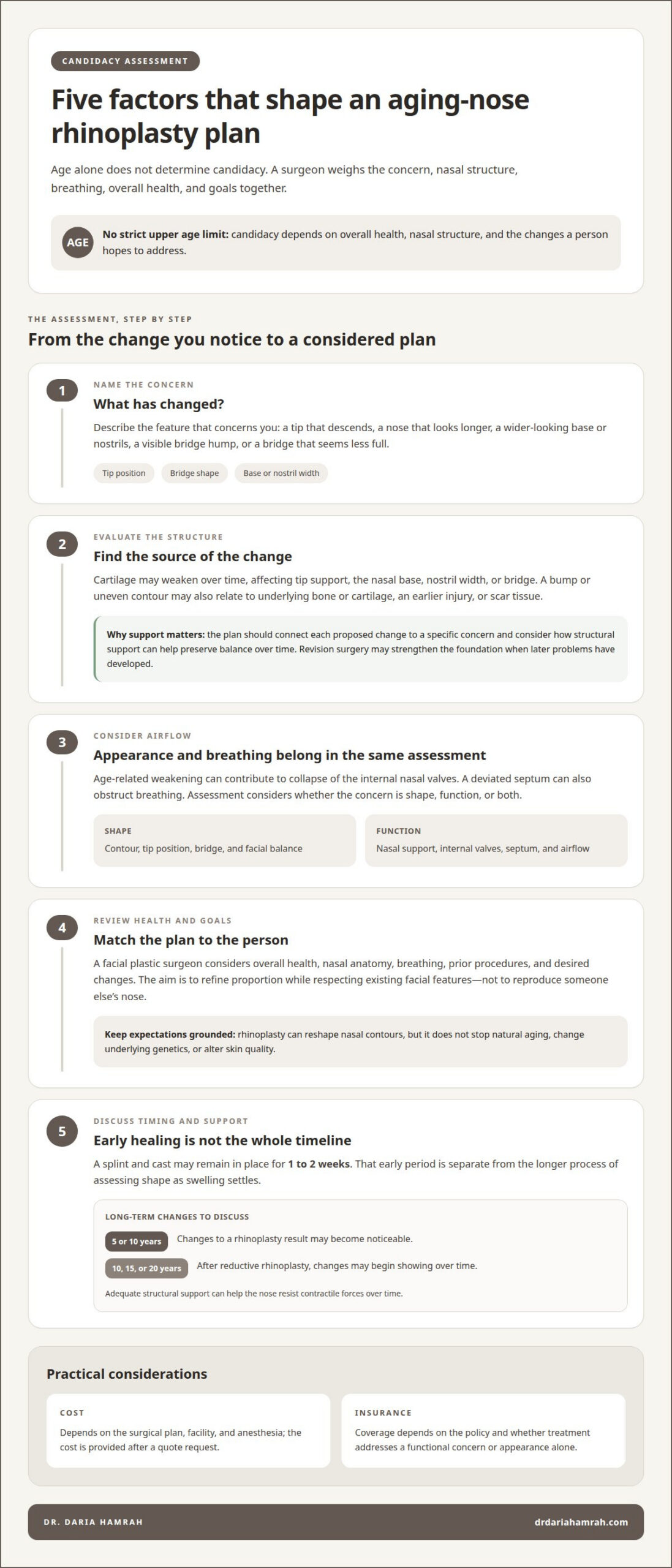
Age by itself doesn’t determine candidacy. A person’s nose at 70 can differ from their nose at 17, even without prior surgery. Cartilage may weaken over time, changing the nasal base, nostril width, tip support, or bridge. A facial plastic surgeon considers these structures alongside the patient’s health, breathing, and desired changes.
The bridge can change in different ways. A dorsal hump may become more noticeable, while volume loss can make the bridge look less full. A bump may also stem from an earlier injury or the nose’s underlying bone and cartilage shape. Consider which feature concerns you, such as a visible profile hump or a bridge that looks less defined in photographs.
Changes in support may cause the nasal tip to descend, making the nose appear longer or more prominent. A wider-looking base or nostrils can also affect facial balance. Rhinoplasty reshapes nasal cartilage and other structures to refine contours, but does not stop the underlying aging process. The aim is to restore proportion while respecting your existing facial features, not to reproduce someone else’s nose.
Long-term changes matter, especially for patients considering surgery after an earlier rhinoplasty. Changes to a result may become noticeable 5 or 10 years after surgery. After reductive rhinoplasty, changes may begin showing after 10, 15, or 20 years. Adequate structural support can help the nose resist contractile forces over time. Revision rhinoplasty may strengthen the nasal foundation and address problems that developed later.
Recovery and support are also part of candidacy discussions. According to Dr. Daria Hamrah, the splint and cast may be left in place for 1 to 2 weeks. That early healing period is distinct from the longer process of evaluating the nose’s shape as swelling settles. Patients should discuss their priorities, breathing concerns, prior procedures, and expectations before deciding whether surgery fits their needs.
Consider candidacy as a balance of four factors: the concern to address, nasal structure, breathing, and overall health. For example, a patient focused on a descending tip may need a different plan from someone primarily concerned about a changing dorsal hump. A careful assessment links each proposed adjustment to a specific goal and considers how support can help preserve a balanced result over time.
The cost varies with the surgical plan, facility, and anesthesia, and is provided after a quote request. Insurance coverage depends on the policy and whether surgery addresses a functional concern or appearance alone.
Age-related nasal tip drooping
With age, declining collagen production and loosening ligaments can reduce support around the nasal tip. As the tip angles downward, the nose may appear longer or more prominent in profile. Thinner, less elastic skin can also make underlying irregularities easier to see. For example, a small change in tip position may affect how the nose looks beside the lips and chin.
Rhinoplasty addresses structure, not just the visible angle. A surgeon evaluates the nasal tip, cartilage support, bridge, and the nose’s relationship to surrounding features. Surgical refinement can reposition or reshape nasal structures to improve the tip’s appearance and support. The goal is a balanced profile that suits your face, rather than a copy of someone else’s nose.
For older adults, rhinoplasty reshapes nasal structures through surgery, while a non-surgical nose lift uses a temporary approach to alter contours. Non-surgical rhinoplasty results typically last several months. It does not provide the same structural reshaping as surgery or correct an internal obstruction.
Appearance is not the only concern. Age-related weakening can contribute to collapse of the internal nasal valves, narrow passages that help regulate airflow. A deviated septum can also obstruct breathing. A comprehensive surgical assessment considers both concerns, so the plan can address nasal contour alongside structural causes of reduced airflow.
Bridge bumps and uneven contours need their own assessment. A bump may relate to hereditary structure, overdeveloped bone or cartilage, an injury, or scar tissue after trauma. A crooked profile can reflect nasal bones or a septum that sits off-center. Refinement depends on identifying the source of the irregularity; changing the bridge alone will not necessarily resolve a septal or airflow issue.
Rhinoplasty also has limits. It changes nasal contours, not skin quality, so it does not remove spots or redness. If thin skin makes an existing contour more visible, this distinction helps set an aesthetic goal: reshape the underlying structure rather than expect surgery to alter the skin itself.
Before deciding, describe the change you notice, such as a tip that points downward in profile or breathing that feels restricted. Discussing appearance and airflow together helps clarify whether your main concern is nasal shape, function, or both.
Combining rhinoplasty with facial procedures
Combining procedures can address the nose alongside other facial features. The right plan depends on the changes you want to make.
Facial Proportions and Harmony
Facial harmony describes how features relate in size, position, and overall appearance. A change to the nose can affect how the chin, cheeks, or eyes seem in comparison. For example, if you are concerned about a prominent profile, consider the nose in the context of your overall facial proportions rather than in isolation.
Rhinoplasty may be combined with a facelift or mini-lift, eyelid surgery, chin augmentation, dermal fillers, or skin resurfacing treatments. These options address different concerns: rhinoplasty reshapes the nose, while eyelid surgery focuses on the area around the eyes. Considering several features together can help define a cohesive aesthetic goal.
Combining procedures does not mean every procedure belongs in one plan. For instance, nasal refinement and smoother skin involve different tissues and treatment approaches. Listing the changes that matter most helps separate structural goals from surface-level concerns and gives the consultation a clear focus.
Think about the result you want across your face. A bridge adjustment may change your profile, while eyelid surgery addresses a different area. Discussing these relationships helps set priorities and clarify which procedure addresses each concern, rather than expecting one operation to create changes beyond its scope.
Consulting a Facial Plastic Surgeon
A consultation with a facial plastic surgeon is a personalized discussion of your cosmetic goals, nasal structure, and functional concerns. A board-certified facial cosmetic surgeon can assess whether cosmetic or functional rhinoplasty fits your needs. Bring specific examples, such as a profile feature you would like refined or a breathing concern you want evaluated.
Use the consultation to describe your priorities in your own words. You might explain that your nasal tip looks lower in profile, or that you are considering eyelid surgery alongside nasal changes. The surgeon can assess how each concern relates to your facial proportions and discuss what rhinoplasty can address, rather than treating every feature as one problem.
When choosing a facial plastic surgeon, look for an assessment that connects anatomy, function, and aesthetic goals. Discuss the proposed nasal changes, any additional procedures you are considering, and how each would contribute to the overall plan. Ask how the plan accounts for your facial features and breathing, so your expectations focus on realistic, specific changes.
Before settling on a combined approach, make sure each procedure has a clear purpose. For example, rhinoplasty may address nasal contour, while skin resurfacing targets skin texture. A focused plan links every treatment to a stated concern and keeps the intended outcome centered on balanced facial rejuvenation.
What Changes Can You Expect in a Rhinoplasty Over Time?
Rhinoplasty candidacy rests on more than age or a single feature. A facial plastic surgeon considers nasal structures, breathing, health, and the changes you want. People in their 40s, 50s, 60s, and 70s choose surgery for cosmetic concerns, functional concerns, or both. There’s no strict upper age limit, but the reasons for surgery and overall health shape the discussion.
For older adults, realistic expectations begin with understanding what surgery can change and what continues naturally. Rhinoplasty can improve facial balance and reshape nasal contours, but it cannot alter genetics or stop aging. If you want a straighter profile, for example, understand that surgery addresses the nose’s structure, not every change in the surrounding facial skin.
Age can affect the factors considered before surgery. Older age can increase anesthesia risk, slow healing, and raise the chance of infection after rhinoplasty. Medical conditions that affect anesthesia or recovery, and medications that influence bleeding, matter during an eligibility assessment. Tell the surgeon about diagnosed conditions and provide a complete medication list, including prescriptions and supplements.
Breathing is another part of candidacy. You may seek surgical changes for appearance while also experiencing obstruction or reduced airflow. Discussing both goals helps distinguish a cosmetic concern from a functional one. A plan should link each proposed change to a specific feature or breathing issue, rather than promise a completely different nose.
Time also shapes expectations. Swelling settles over months, and complete healing can take up to a year. A nose may continue becoming thinner and more defined for 3 to 5 years after surgery. These changes mean early appearance doesn’t represent the final result; recovery is gradual, not a single moment when the nose is suddenly finished.
Long-term outcomes vary with technique and structural support. Some noses show collapse as soon as 5 years after strictly reductive rhinoplasty. Changes after reductive surgery may also begin after 10, 15, or 20 years. By contrast, experienced specialists note that many rhinoplasty patients maintain stable results for decades, apart from natural skin aging. These observations illustrate why surgical planning considers structural support, not only reduction.
Use a consultation to define your priorities and expectations. Describe the feature you want changed, any breathing difficulty, previous nasal surgery, and relevant health details. Then discuss how the proposed approach affects structure and what may continue changing with age. This conversation helps align the surgical goal with your anatomy and long-term perspective.
Medical conditions that affect anesthesia or recovery can influence eligibility, as can medications that affect bleeding. Share your diagnosed conditions and a complete list of prescriptions and supplements with Dr. Daria Hamrah during your evaluation.
Rhinoplasty for an aging, drooping nose
A drooping tip can reflect weakening cartilage and support structures, not simply a change in appearance. Surgery focuses on reshaping and supporting nasal tissue while considering the nose’s form and function.
Procedure Steps
Rhinoplasty for an aging nose begins with a plan based on nasal structure, breathing, and the changes you want. During surgery, incisions are placed inside the nostrils or at the bottom of the nose. The surgeon reshapes or repositions cartilage, refining the tip and other contours while preserving structural support.
When age-related cartilage weakness needs reinforcement, cartilage grafts can help support nasal shape and function. Graft material may come from the septum, ear, or rib. The choice depends on the nose’s structural needs. For example, a descending tip may call for added support, while a bridge concern may require a different adjustment.
This distinction matters because removing tissue alone can leave a weakened foundation. Supportive techniques focus on maintaining the nose’s framework while refining its outline. A plan can also address airflow concerns alongside appearance, such as internal nasal valve collapse or a deviated septum. The goal is a balanced, youthful-looking contour that remains connected to the nose’s function.
If you have had rhinoplasty before, the procedure may involve revision work. Revision rhinoplasty can strengthen the nasal foundation and address concerns that developed over time. Scar tissue and existing structural changes affect the surgical approach, so the operation is planned around the nose’s current condition rather than simply repeating an earlier plan.
Recovery Timeline
Recovery includes an early healing period and a longer process as swelling settles. Many patients return to work and light activities after one to two weeks. Swelling and bruising typically subside within a few weeks, but the nose’s final contours take longer to emerge.
Most swelling subsides within a few months, and complete healing can take up to a year. The nose may continue becoming thinner and more defined for 3 to 5 years after surgery. These stages matter because a tip that looks swollen early in recovery doesn’t show the settled result.
Follow the recovery guidance provided for your procedure, and give nasal tissue time to heal before judging subtle changes. The surgical plan, degree of reshaping, and support needs all influence recovery. Discuss the expected healing stages alongside your goals, especially if breathing and appearance are both concerns.
For a drooping tip, the central takeaway is structural: refinement and support work together. Discuss rhinoplasty options for a drooping nose to understand how your nasal anatomy and goals shape the plan.
Dr. Daria Hamrah: Deep Plane Facelift (Longevity Facelift)
Dr. Daria Hamrah offers the Deep Plane Facelift (Longevity Facelift) for patients whose facial aging concerns extend beyond the nose. Rhinoplasty focuses on nasal shape and structure, while a facelift addresses facial rejuvenation through a different approach. Considering each concern separately can help clarify which procedure aligns with your priorities.
If your main concern is a drooping or changing nose, rhinoplasty is the relevant conversation. If broader facial changes also affect how you feel about your appearance, discussing a Deep Plane Facelift may help you understand how those goals fit into a thoughtful plan. The next step is a personalized discussion of your concerns, anatomy, and expectations.
Contact Dr. Daria Hamrah to discuss your facial rejuvenation goals and procedural options.
Choose a Next Step That Reflects Your Goals
Considering rhinoplasty for an aging nose can help you clarify what matters most, from a change in profile to a broader sense of facial balance. Let your priorities guide the conversation. You do not need to arrive with a complete plan; specific questions about appearance, breathing, and the changes you hope to see can make the discussion more useful.
Dr. Daria Hamrah offers Rhinoplasty, Botox, and the Deep Plane Facelift (Longevity Facelift). These options address different concerns, so the next step is to understand which approach aligns with yours. A focused conversation can help you explore your goals and consider how nasal surgery may fit within your broader facial rejuvenation priorities.
Contact Dr. Daria Hamrah to discuss your options and take a thoughtful next step toward a plan that feels right for you.
Frequently Asked Questions
What does aging do to the nose?
Aging can change the nose’s support, shape, and apparent proportions. Weaker cartilage may affect nostril width or tip position, while changes in the bridge can alter the profile. Thinner, less elastic skin can make existing contours more visible. If a familiar feature looks different in photographs, compare the bridge, tip, and nostrils separately; identifying the specific change can clarify what you want assessed.
Can I combine rhinoplasty with a facelift?
Yes, rhinoplasty can be combined with a facelift as part of a facial procedure plan. The procedures address different areas: rhinoplasty reshapes nasal structures, while a facelift addresses facial changes. A consultation can explore whether both fit your goals, anatomy, and health. For example, someone concerned about both nasal contour and facial laxity can discuss each concern together without assuming that one procedure will address the other.
Can rhinoplasty make you look younger?
Rhinoplasty may create a younger-looking appearance by refining nasal contours that have changed, such as a tip that sits lower or a nose that appears more prominent. Its effects are specific to the nose; it does not reverse aging across the face or change skin concerns such as redness. Consider the feature that draws your attention, then discuss whether adjusting that contour could support the overall appearance you want.
Is It Too Late to Consider Rhinoplasty?
No, it is not automatically too late to consider rhinoplasty as an older adult. Age alone does not set an upper limit, but health, healing considerations, nasal structure, and surgical goals matter. Someone who deferred surgery earlier may now be focused on breathing, a changed profile, or both. The useful first step is to describe those concerns clearly and discuss how they relate to your health and expectations.
Is rhinoplasty riskier for older patients?
Older age can increase anesthesia risk, slow healing, and raise the chance of infection after rhinoplasty. That makes an individualized assessment important, rather than assuming age alone determines risk. Share your medical history and medications, and explain whether breathing or appearance is your priority. Your overall health and the scope of the planned surgery are relevant when discussing whether the procedure is appropriate.
Is there an age limit for rhinoplasty?
There’s no strict upper age limit for rhinoplasty. People in their 40s, 50s, 60s, and 70s consider it for cosmetic reasons, functional concerns, or both. The decision depends on more than a birthday: health, nasal anatomy, breathing, and expectations all matter. For instance, a patient focused on airflow may have different goals from someone seeking a subtle profile change.
Why Do Older Patients Decide to Have a Nose Job Later in Life?
Older adults may consider rhinoplasty because the nose’s appearance or function has changed, or because a concern they had earlier now feels worth addressing. You might notice reduced airflow, a tip that appears lower, or a bridge that looks different in profile. Some patients consider cosmetic changes, functional improvement, or both. Naming the concern helps distinguish a structural goal from a broader wish for facial change.
How does the nose change with age?
The nose can change in several visible ways over time. Cartilage may weaken, the tip may descend, and the base or nostrils may look wider. The bridge can develop a more noticeable hump or lose volume, while thinner skin may reveal contours more clearly. These changes do not occur identically for everyone. Noting whether the change involves width, tip position, bridge shape, or breathing can make your concerns more specific.