
A natural-looking male rhinoplasty isn’t simply about making the nose smaller. Key male rhinoplasty considerations include thicker nasal skin, firmer cartilage, and more prominent bone, along with preserving features such as a straighter bridge, stronger projection, and a less upturned tip. The aim is to shape the nose in balance with the face, not erase its character.
It makes sense to want a refined result that still feels like you. Understanding how nasal structure, breathing, and personal aesthetic goals shape planning can help you see what rhinoplasty may address and why a measured approach matters.
This article explores how male nasal anatomy can affect surgical choices, how facial identity guides natural-looking results, and when concerns such as a deviated septum may enter the conversation. It also explains how chin augmentation can influence overall facial balance, so you can see the nose as part of a larger, connected profile.
Key Takeaways
- Understand how thicker skin, firmer cartilage, and stronger bone structure can shape surgical planning and the refinement achievable.
- Learn how breathing concerns, including a deviated septum, can be considered alongside changes to the nose’s appearance.
- See how chin projection may affect the balance of the profile and inform decisions about combining procedures.
- Compare common aesthetic goals while recognizing that the right approach depends on each person’s facial proportions.
- Explore why preserving distinctive features helps support a result that looks natural and in harmony with your face.
Male nasal skin, cartilage, and bone anatomy
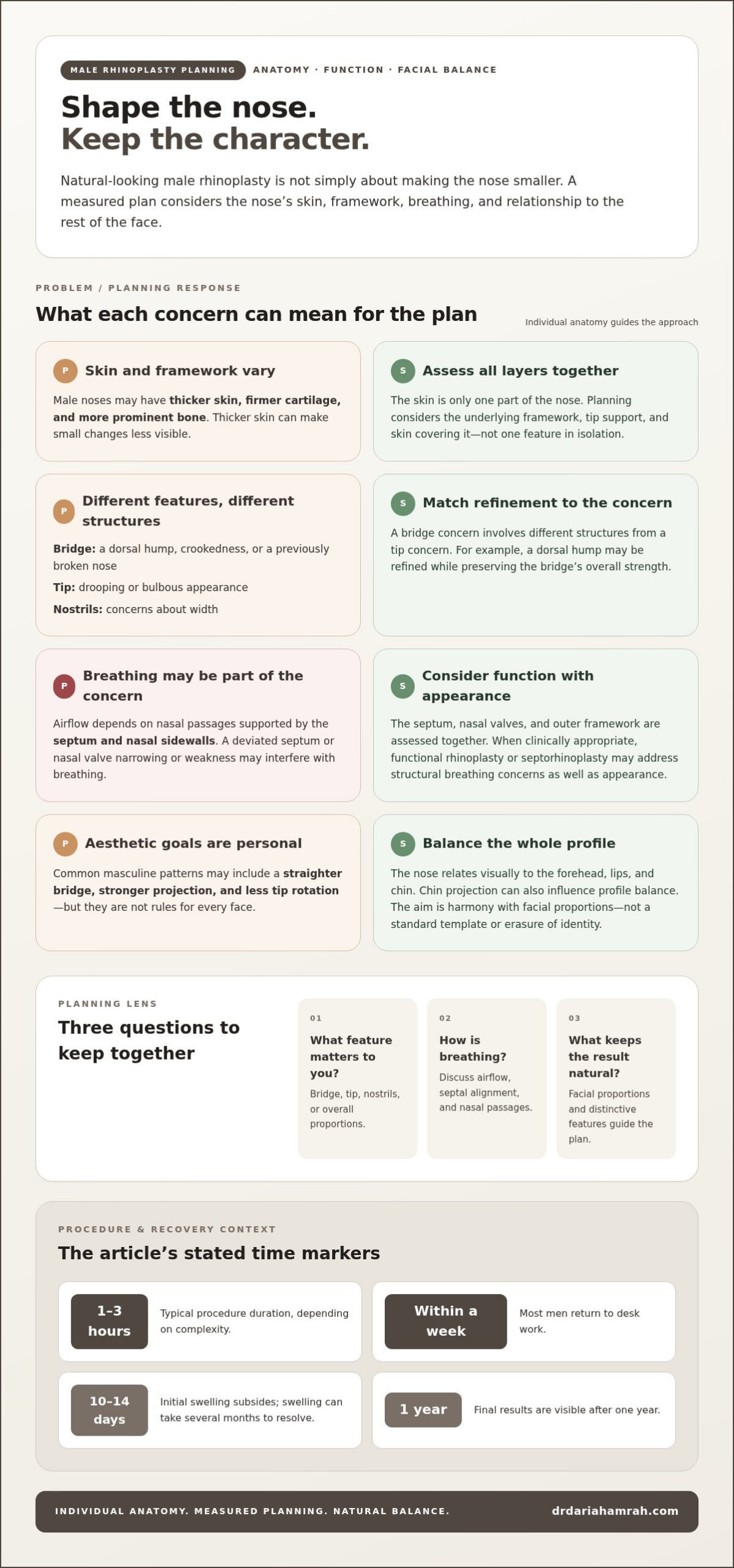
Male noses may have thicker skin, firmer cartilage, and more prominent bone. Surgeons consider these features, facial proportions, and age-related tissue changes when planning for appearance and function.
Masculine Nasal Structure and Proportions
Masculine nasal proportions often include a straighter bridge, stronger projection, and a less rotated tip. These are common patterns, not rules for every face. They matter because the nose sits within a broader profile, relating visually to the forehead, lips, and chin. For example, a plan can refine a dorsal hump while preserving the bridge’s overall strength. The goal is balance, not a standard template.
Skin, Cartilage, Bone, and Aging
Thicker nasal skin can make small changes less visible, while firm cartilage and prominent bone shape the underlying framework. Surgeons assess these layers together rather than treating the skin as the whole nose. A change to the bridge, for example, must be considered alongside tip support and the skin covering it. Age also informs planning: skin quality and the tissues around the nose affect how features appear together. The same adjustment can look different as surrounding facial proportions change. Considering these factors helps shape a measured plan that respects existing structure and support.
Nasal Features and Function
Rhinoplasty may address a dorsal hump, a crooked or previously broken nose, a drooping or bulbous tip, or wide nostrils. Each concern involves a different part of the nasal framework. A bridge concern, for instance, differs from a tip concern because the structures involved are different. Appearance is only part of the assessment. Air moves through passages supported by the septum and nasal sidewalls, so changes to the outer shape must account for these structures too. This matters when someone wants visible refinement and also has restricted breathing.
Septum and Nasal Valve Concerns
The septum separates the nasal passages, and a deviation may affect airflow. Nasal valve collapse refers to narrowing or weakness in a key passage that can also interfere with breathing. These concerns make function part of planning, not an afterthought. A surgeon considers the septum, nasal valves, and outer framework together, especially when obstruction follows trauma or occurs alongside a crooked nose. When clinically appropriate, functional rhinoplasty or septorhinoplasty may address structural breathing concerns as well as appearance. This helps clarify whether the goal is aesthetic, functional, or both.
Men may have thicker nasal skin, firmer cartilage, and more prominent bone than women. These are broad comparisons, not descriptions of every individual. Assessment considers each person’s skin, cartilage, bone, facial proportions, and breathing-related structures together.
What Makes Male Rhinoplasty Different From Female Rhinoplasty?
Aesthetic priorities in rhinoplasty can differ, but breathing concerns matter for everyone. For men, planning may bring appearance goals together with an assessment of obstruction, septal alignment, and airflow.
Men may seek changes to a dorsal hump, a crooked or previously injured nose, or a drooping tip. Aesthetic preferences may include a straighter bridge, stronger projection, and a less rotated tip. These are individual goals, not fixed standards. The plan should account for the person’s proportions and any functional concerns, rather than assuming every man wants the same shape.
How can men choose a qualified rhinoplasty surgeon in the United States? Review the surgeon’s relevant training, rhinoplasty experience, and examples of natural-looking results. In a consultation, ask how the plan will address your breathing concerns as well as your aesthetic goals.
How much does male rhinoplasty cost in the United States, and does insurance cover it? The price depends on the case and is given after a quote request; factors include the scope of surgery and whether functional work is involved. Insurance coverage depends on the plan and the reason for surgery, so cosmetic goals and breathing-related concerns may be treated differently.
What happens during a male rhinoplasty consultation and procedure? The consultation reviews your goals, breathing concerns, and nasal structure, including the septum and nasal passages. Male rhinoplasty typically takes 1-3 hours, depending on complexity.
What is the recovery timeline after male rhinoplasty? Most men return to desk work within a week, and initial swelling subsides within 10-14 days. Swelling can take several months to resolve, while final results are visible after one year.
What are the risks and complications of rhinoplasty for men? Swelling, bruising, and mild discomfort may occur in the days after surgery. The planned structural changes and a person’s nasal anatomy inform the risks and potential complications to discuss before surgery.
How can rhinoplasty affect breathing and nasal function? Changes to the septum or nasal support structures may affect airflow, so breathing should be considered alongside appearance. A deviated septum or nasal valve collapse may contribute to obstruction; functional rhinoplasty or septorhinoplasty may be appropriate when clinically indicated.
Breathing concerns belong in the discussion alongside appearance goals. A deviated septum, enlarged turbinates, and past trauma are possible reasons men seek rhinoplasty to improve breathing. These concerns may be considered alongside preferences for bridge shape, projection, and tip position. A person’s nasal structure and reasons for seeking care help guide the conversation.
Describe the breathing concerns that matter to you and ask how they relate to the planned changes. A consultation can clarify whether your goals are mainly aesthetic, functional, or both, and how a plan may address them. Stating your priorities makes the discussion specific to you rather than to a general idea of a masculine nose. It also helps you understand the intended appearance changes in relation to nasal function before deciding whether the plan fits your goals.
Combining rhinoplasty with chin augmentation
A profile is shaped by more than the nose. Chin projection affects how the nose looks from the side, so some men consider rhinoplasty with chin augmentation to strengthen the jawline’s relationship to the profile. The aim is to assess both features together rather than judging nasal changes in isolation. For example, reducing a prominent nasal profile without considering a recessed chin could produce a different overall balance than the patient wants.
Profile planning starts by identifying what draws attention from the side and front. The nose, chin, lips, and jawline form a connected outline, like landmarks on a map. A surgeon considers how these features relate before discussing changes. If the chin appears less projected beside the nose, chin augmentation may be part of a broader facial-balance plan. If the chin already supports the profile, focusing on the nose may better match the person’s priorities.
Combining procedures does not mean pursuing a stronger jawline at any cost. The goal may be a more balanced profile while keeping the nose’s defining character. A useful discussion separates the desired changes: what should happen to the bridge or tip, and what should change in chin projection? This helps avoid altering one feature simply to compensate for another and gives the plan a clear purpose.
Consider two profile concerns: a prominent nose with a less projected chin, or a nose that feels out of balance despite a well-defined chin. Each suggests different planning priorities. In the first case, the chin’s contribution deserves attention alongside nasal proportions. In the second, adding chin projection may not address the concern. These examples are not a diagnosis; they show why facial features should be evaluated together.
Before considering a combined approach, clarify the outcome you want in plain language. Describe which profile view concerns you, what you want to preserve, and whether jawline strength is part of your goal. Bring examples of changes you like, using them as communication aids rather than templates. The front view matters too: a profile change should suit your face from other angles, not only in one photograph.
Good planning connects each procedure to a distinct reason. Rhinoplasty addresses the nose, while chin augmentation can strengthen the jawline’s relationship to the profile. Discussing both can help establish whether the nose alone explains your concern or whether chin projection also affects visual balance. The decision should reflect your priorities and facial proportions, with a natural result in mind rather than a formula for every man.
Differences between male and female rhinoplasty goals
Rhinoplasty goals reflect personal preferences, not a strict male or female template. One man may want a dorsal hump softened while keeping a strong bridge; another may prioritize correcting a crooked nose. The useful comparison is between the features someone wants changed and those they want to preserve. Gender can inform the discussion, but individual goals and facial proportions guide the plan.
Masculine aesthetic preferences may include a straighter bridge, stronger projection, and a less rotated tip. These features can support a traditionally masculine appearance, but they are not requirements. For example, a patient may want the tip refined without making it noticeably upturned. Describing the desired change precisely helps distinguish subtle definition from a more dramatic shift in the nose’s character.
Over-reducing or excessively refining a man’s nose can compromise masculine features and create an unnatural or overly feminine appearance. A narrower bridge or highly rotated tip, for example, may not suit the patient’s preferred profile. These changes are not always unsuitable; the surgeon and patient should discuss how each adjustment affects the nose’s relationship to the forehead, lips, and chin.
Women’s rhinoplasty goals also vary, so broad comparisons can mislead. One patient may request a softer contour; another may seek correction after trauma or improved breathing. Neither goal represents every woman’s preferences. A more useful discussion focuses on the individual: which feature feels out of balance, what change would feel natural, and which identifying characteristics should remain recognizable.
Use concrete descriptions when discussing your goals. Instead of saying “make it smaller,” identify whether you mean the bridge, tip, nostrils, or projection. Someone concerned about a visible hump might want a smoother profile while retaining bridge strength. A person focused on a bulbous tip may prefer more definition without a sharp or pinched appearance. Specific examples help clarify the intended result.
Photographs can help explain your preferences, but use them as references rather than templates. Point out a detail you like, such as a straight bridge, then explain how you want it to fit your features. Compare the front and side views, since a change that looks balanced in profile may feel different head-on. This individualized approach keeps aesthetic goals connected to facial identity rather than assumptions about gender.
Preserving facial identity and natural-looking results
A natural-looking result refines the nose without making it seem unrelated to the face. For example, softening a dorsal hump can preserve a strong bridge and familiar profile. This distinction matters because over-reducing or excessively refining a man’s nose can compromise masculine features. Start by identifying what you want changed and what should remain recognizable.
Set specific goals instead of making broad requests such as “make it better.” Identify whether your concern is the bridge, tip, nostrils, or projection. Then describe a feature you want to retain, such as a straight profile or defined tip. These details give the discussion direction and distinguish personal preferences from a generic ideal.
Facial identity depends on the relationships between features. From the side, the nose sits between the forehead, lips, and chin; from the front, its width and alignment affect facial balance. Narrowing the bridge, for instance, may change how the nose relates to the eyes. Considering both front and profile views can help keep the intended refinement coherent from different angles.
Reference photos can clarify your preferences, but they should not become templates. Point to one detail, such as a less prominent hump, and explain why it appeals to you. Then discuss how that feature might suit your facial proportions. A photograph can suggest a direction, but it cannot account for your skin, cartilage, bone, or identity.
A useful planning exercise separates three points: the feature you want adjusted, the amount of change you want, and the traits you want preserved. For example, you might request more tip definition while keeping its rotation restrained. This communicates a specific goal without asking for a smaller nose overall. It also keeps the focus on character, not size alone.
Natural-looking refinement does not mean making no visible change. It means each adjustment supports the face rather than competing with it. A smoother bridge can still look strong, and a refined tip can remain recognizably yours. Discussing these distinctions helps establish a shared vision before deciding on changes to the nasal structure.
If you’re considering changes, discuss your facial identity and rhinoplasty goals as part of a personalized planning conversation. Bring clear examples of what you hope to refine and preserve. The most useful starting point is a specific goal that respects your own features, rather than a borrowed standard of perfection.
Dr. Daria Hamrah: Deep Plane Facelift (Longevity Facelift)
The Deep Plane Facelift (Longevity Facelift) addresses facial rejuvenation, not nasal concerns. If you are considering both facial rejuvenation and nasal changes, Dr. Daria Hamrah offers the facelift and rhinoplasty so you can discuss each goal within a broader facial plan. A facelift does not replace rhinoplasty: the procedures address different areas and concerns. This distinction can help you decide whether your priority is nasal shape, facial rejuvenation, or both. Dr. Daria Hamrah’s Deep Plane Facelift approach is designed to support natural results and long-term tissue health. A rhinoplasty discussion can focus on your anatomy, breathing, and the features you want to preserve. Contact Dr. Daria Hamrah to discuss your goals and possible next steps.
Let Your Goals Guide the Next Step
The next step is to turn your preferences into a clear discussion about what you want to change and preserve. Thoughtful male rhinoplasty considerations should reflect your features and priorities, not a borrowed ideal. A consultation can help you discuss your goals and how they may inform a personal plan.
Dr. Daria Hamrah offers rhinoplasty, Botox, and the Deep Plane Facelift (Longevity Facelift) for distinct facial concerns. If your focus is nasal shape or facial balance, bring the features you want to refine and the qualities you hope to retain. Clear priorities give the discussion a meaningful starting point.
Contact Dr. Daria Hamrah to discuss your goals and possible next steps. An informed, considered conversation can help you move forward with greater clarity and confidence.
Frequently Asked Questions
What should men consider before getting rhinoplasty?
Before rhinoplasty, clarify the change you want and the features you want to preserve. Key male rhinoplasty considerations include whether your priority is appearance, breathing, or both, and how you would describe a satisfying result. For example, distinguish “reduce the bridge” from “make the whole nose smaller.” Bring your priorities to the consultation and discuss how each requested change fits your face, rather than relying on a broad ideal.
How does male rhinoplasty differ from female rhinoplasty?
Planning reflects each person’s anatomy and goals, not a fixed gender-based formula. A man seeking a natural change might prioritize preserving his profile’s character, while another patient may want a different refinement. The important distinction is the result each person wants, not assumptions about what men or women should prefer. Share your priorities clearly so the discussion can focus on the features that matter to you.
What nose shape and features are considered masculine in rhinoplasty?
A straighter bridge, stronger projection, and a less rotated tip are often associated with masculine nasal features. These are common aesthetic patterns, not requirements or universal standards. Someone may want a smoother bridge while retaining a defined profile, for example. Discuss which characteristics feel authentic to you and how your nose should relate to your face, rather than choosing a shape based on gender alone.
Can male rhinoplasty be combined with septoplasty or other procedures?
Yes. Rhinoplasty may be combined with septoplasty when a deviated septum contributes to breathing problems. Chin augmentation may also be considered alongside rhinoplasty to strengthen the jawline’s relationship to the profile. These procedures address different concerns, so describe each goal separately: airflow, nasal appearance, or chin projection. This clarity helps frame a discussion about whether a combined plan addresses the features you want considered together.