
Recovery is a process, not a single finish line. The blepharoplasty recovery timeline commonly includes 10 to 14 days before people resume regular tasks, while subtle healing and refinement continue for several months. Blepharoplasty is eyelid surgery, and the pace of recovery depends partly on whether the upper eyelids, lower eyelids, or both are treated.
It’s natural to focus on early swelling and bruising, especially when planning time away from work or daily activities. These visible signs often ease before healing is complete. Knowing the stages of the blepharoplasty recovery timeline can help you set realistic expectations and recognize when a change needs your surgeon’s attention.
This guide explains what blepharoplasty involves, what recovery may look like from the first days through later healing, and how to manage common symptoms. You’ll also learn which factors can affect recovery and which warning signs call for prompt contact with your surgeon.
Key Takeaways
- Plan your return to work and everyday activities around the type of eyelid surgery you have and the demands of your routine.
- Swelling and bruising often look most noticeable in the first few days, then gradually ease as healing progresses.
- Visible improvement comes before the final result; eyelid scars and tissues continue to mature over time.
- Know which changes are part of ordinary healing and which warning signs call for prompt contact with your surgeon.
- Your healing pace can be influenced by factors such as skin elasticity, the extent of surgery, and how closely you follow post-operative instructions.
What happens during eyelid surgery?
Blepharoplasty treats the upper eyelids, lower eyelids, or both to address concerns around the eyes. In the United States, surgery may take 30 minutes to two hours, depending on the procedure. Upper eyelid surgery typically takes 45 minutes to one hour, while treating both upper and lower eyelids may take closer to two hours. It’s generally an outpatient procedure, so you go home the same day.
Arrange for someone to help you during the first 24 hours at home. Rest and follow the surgeon’s post-operative instructions for cleaning the eyelid and using any recommended ointment. Keep your head elevated when resting, and allow time away from prolonged reading or screens. Your vision may feel less comfortable during early recovery, so don’t drive until you can see clearly and your surgeon’s guidance allows it.
Light activities can often resume within 24 to 48 hours, but that doesn’t mean you’re ready for a full workday or exercise. Light walking may begin within a few days. Increase activity gradually, and avoid strenuous exercise and heavy lifting for at least 3 to 4 weeks, until your surgeon clears you. Raising pressure through exertion can interfere with healing around delicate eyelid tissues.
- Desk or remote work: Some people feel ready to return after 7 to 10 days, depending on comfort and the extent of surgery.
- Regular tasks: Many people resume everyday activities within 10 to 14 days. Mild bruising or swelling may still be visible.
- Physical or public-facing work: Plan for about two weeks away, or longer if the role involves heavy lifting, sustained bending, or exertion.
- Exercise: Keep early movement gentle. Wait for your surgeon’s clearance before returning to strenuous workouts.
Social readiness doesn’t always match work readiness. From days 8 to 14, you may feel more comfortable being seen, while signs of healing remain. Contact lenses typically need to be avoided for 1 to 2 weeks after upper eyelid surgery. Makeup can usually resume two weeks after surgery, once the surgeon’s instructions permit it.
Schedule a follow-up appointment within one week after surgery so your surgeon can assess healing. Stitches after upper eyelid surgery typically remain for about a week. Use the visit to discuss returning to work, resuming activities, or any concern about your vision or recovery. The blepharoplasty recovery timeline is a guide; your procedure and healing response determine the pace of each stage.
How Can You Manage Pain, Swelling, and Bruising After Blepharoplasty?
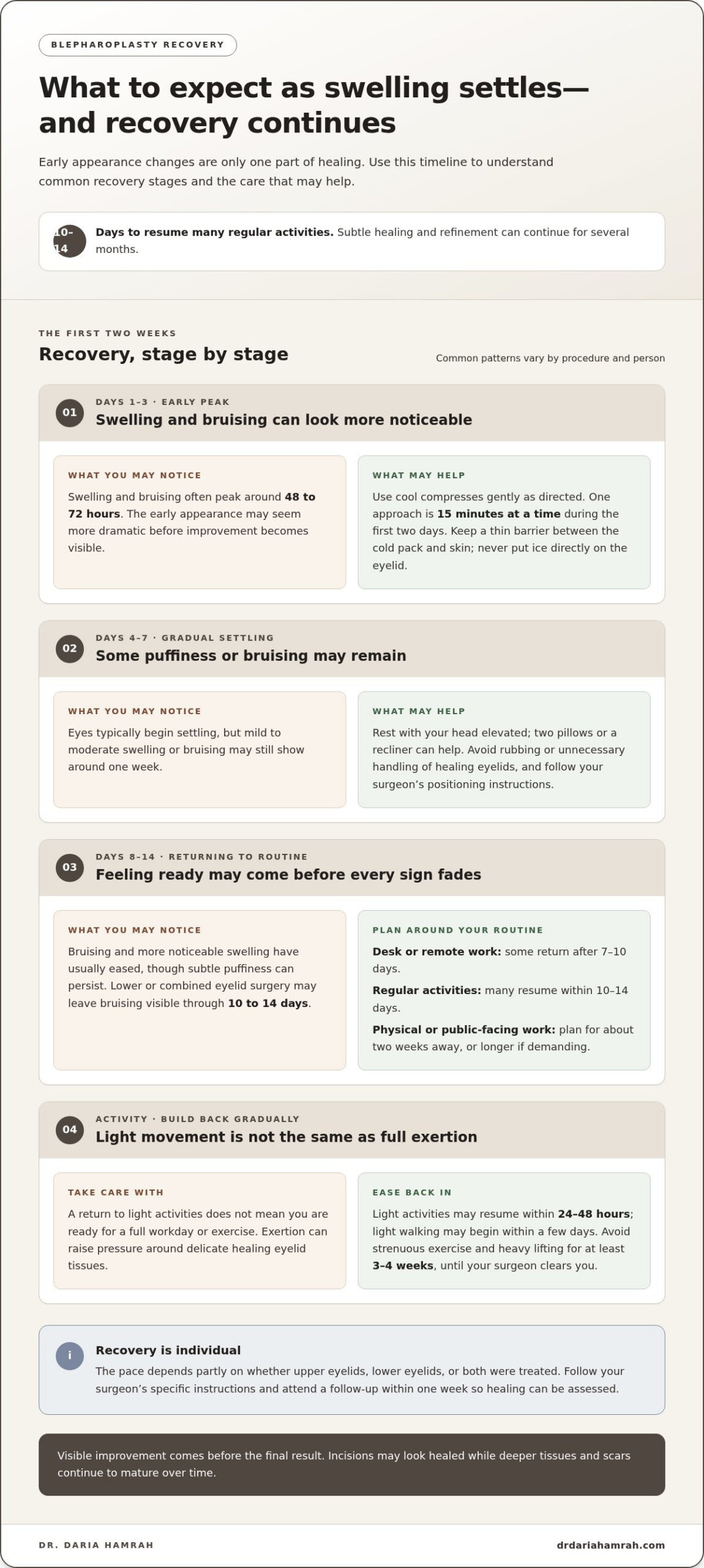
The day-by-day pattern is often clearest during the first week: swelling and bruising peak around 48 to 72 hours, then begin settling from days 4 to 7. By days 10 to 14, bruising and more noticeable swelling have usually eased, though subtle puffiness can persist.
Early Swelling, Bruising, and Discomfort
In the early stages, eyelid swelling, bruising, and discomfort are common as tissues respond to surgery. These changes can make the first days feel more challenging, so understanding their usual pattern helps you plan for rest and avoid judging the result too soon. The amount and duration vary depending on whether surgery involved the upper eyelids, lower eyelids, or both.
Swelling and Bruising During the First Few Days
During days 1 to 3, swelling is often among the most visible signs, and swelling and bruising typically peak within 48 to 72 hours. Bruising may look pronounced around the eyes before it starts fading. This early peak is part of the expected progression, and it helps explain why appearance can seem more dramatic before improvement becomes noticeable.
From days 4 to 7, the eyes typically begin settling, although mild to moderate swelling or bruising may remain around one week. After upper eyelid surgery, swelling can peak around 48 hours; bruising and swelling may be most noticeable during the first 3 to 4 days. With lower or combined surgery, bruising can remain visible longer, often through 10 to 14 days.
Cool compresses can help control swelling and ease discomfort during the first 48 to 72 hours. Apply them gently, following your surgeon’s instructions, and avoid pressing on the eyelids. One approach described for recovery is using a compress for 15 minutes at a time during the first two days. Keep a thin barrier between a cold pack and skin, and never place ice directly against the eyelid.
Resting with your head elevated can limit fluid pooling around your eyes overnight. Two pillows or a recliner can help you maintain elevation while sleeping. Follow your surgeon’s advice about positioning, and avoid rubbing or handling your healing eyelids unnecessarily. Small care habits matter because eyelid tissues are delicate.
- Days 1 to 3: Expect swelling and bruising to become more visible, often peaking within 48 to 72 hours.
- Days 4 to 7: Watch for gradual settling; some bruising and puffiness may still show.
- Days 8 to 14: Bruising and noticeable swelling commonly fade, though healing continues.
Follow your surgeon’s specific instructions for compresses and rest, since the procedure and healing response shape care. If you’re considering eyelid surgery, blepharoplasty care and recovery can be discussed as part of understanding the procedure and its healing process.
Cosmetic healing and scar maturation
Incisions may look healed before deeper tissues and scars have finished maturing. Changes emerge gradually, so assess progress over months rather than from a single snapshot.
Incision Healing and Stitch Removal
Incision healing is the early process of closing and settling along the eyelid crease or lower lid. It matters because stitches and surface healing affect when the area can be treated gently. Non-dissolving sutures are often removed around 5 to 7 days after surgery. Eyelid sutures may remain for seven to ten days, depending on the closure and healing pattern.
Follow your care instructions for cleansing the incision, applying any prescribed ointment, and avoiding rubbing. Compresses may be part of early recovery, but they don’t replace incision care. Keep follow-up visits so your surgeon can assess healing and remove sutures at the appropriate time. Don’t pull at a stitch or pick at a healing incision.
Scar Maturation and Sun Protection
Scar maturation is the gradual change in an incision’s color, texture, and visibility after its surface closes. This matters because a fresh incision can appear more noticeable before it softens. Scar maturation after blepharoplasty takes 6 to 12 months. Avoid direct sunlight for as long as six months after surgery, following the surgeon’s specific instructions for protecting the healing eyelid.
During this period, the incision continues to remodel even if the surrounding skin looks settled. Avoid judging the final appearance from early photographs alone. Sun exposure also matters for facial incisions, so include protection in your recovery plan. The incision closing is not the end of healing.
Long-Term Healing and Final Results
Long-term healing includes subtle tissue changes after bruising and obvious swelling have eased. It matters because final results develop on different schedules: upper eyelid results typically develop in 3 to 4 months, while lower or combined results typically develop in 4 to 6 months.
By weeks 3 to 4, patients may notice more defined upper-eyelid creases or smoother lower-eyelid contours. Considerable appearance improvement is often noticeable by the end of month one, while results continue refining during months 2 to 3. Fine swelling and incision maturation can continue for 2 to 3 months.
Complete scar maturation can take 6 to 12 months, so early appearance is not the final measure. Keep follow-up appointments and raise concerns about the incision during healing. Resume exercise only according to your surgeon’s post-operative guidance; activity progression and tissue recovery are separate parts of the process. A patient, consistent approach gives the facial tissues time to mature without rushing the cosmetic assessment.
Warning signs that require contacting the surgeon
Recovery signs need context: swelling and bruising can remain visible around 14 days, while a fever above 101 degrees Fahrenheit warrants a same-day call to the surgeon. Track changes over time, rather than judging one moment in isolation.
In the first days after eyelid surgery, swelling, bruising, and mild discomfort can be part of healing. Interpret symptoms in context: consider when they occur, the procedure performed, and your surgeon’s post-operative instructions. A cold compress or keeping your head elevated may support routine recovery, but neither should delay contacting your surgeon about a concerning change.
A temperature above 101 degrees Fahrenheit after surgery is a clear reason to call the surgeon that day. Give the office the measured temperature, when it began, and any other changes you’ve noticed. Don’t wait for a scheduled follow-up if the threshold is reached. Clear details help the surgical team understand the concern and advise on the next step.
Retrobulbar hemorrhage is an extremely rare complication of blepharoplasty, occurring in less than 0.1 percent of cases. Its rarity doesn’t make it irrelevant: it underscores why you should take an unusual or concerning post-operative change seriously. If you’re unsure whether a symptom fits your recovery instructions, contact the surgeon rather than trying to diagnose it yourself.
- Record the change: Note when it began, whether it is improving or worsening, and which eyelid is affected.
- Share relevant details: Report your temperature, recent care steps, and any change from the recovery pattern you were given.
- Follow the response plan: Use the surgeon’s post-operative contact instructions and describe the concern directly.
It can help to keep a brief daily recovery log, especially during the first 14 days. Note the degree of swelling, bruising, discomfort, and any temperature reading. A simple record gives you specific details to share, rather than relying on memory when you call. Avoid changing prescribed care or applying pressure to healing tissue while waiting for instructions.
Recovery varies, but a trend that concerns you deserves attention. Don’t let cold compresses or an elevated resting position delay a call about a warning sign. At your follow-up, mention symptoms that occurred between visits, even if they eased. Your surgeon can assess those details alongside your healing and surgical plan.
Factors affecting recovery and long-term results
The blepharoplasty recovery timeline reflects more than the procedure itself. Upper and lower eyelid surgery results often last 5 to 10 years, while natural aging continues. Recovery and long-term appearance are shaped by individual tissue characteristics, the surgical plan, and how carefully you follow post-operative instructions.
Skin elasticity and age can influence how eyelid tissue responds during healing. The amount of excess skin removed matters too: surgery involving more tissue has different healing demands than a more limited correction. Your individual healing response also plays a part. These factors help explain why two people having upper blepharoplasty may experience different recovery patterns, even when their procedures seem similar.
Following instructions is one practical factor you can control. Stick to your care plan for incision care, rest, and a gradual return to activities. Keep scheduled follow-up visits, and discuss changes with your surgeon before adjusting your routine. Returning to exercise too early or overlooking a post-operative instruction can disrupt the recovery plan. Consistent care supports healing as tissues settle.
Smoking is another important consideration. Patients are generally advised to stop smoking several weeks before upper blepharoplasty and refrain throughout recovery. Plan for this before surgery, not only afterward. Discuss smoking with your surgeon during preparation, and follow the instructions provided for your recovery.
- Before surgery: Discuss skin elasticity, age, and the amount of excess skin being treated.
- During recovery: Follow the care instructions and attend follow-up appointments.
- For daily comfort: Include practical details, such as wearing glasses, in your planning conversation.
- For long-term expectations: Remember that eyelid results last for years, while natural aging continues.
The crease and surrounding tissues continue to settle as healing progresses, so the early appearance doesn’t determine the lasting result. Keep a record of questions or changes between appointments. Specific notes about comfort, activity changes, or concerns about the eyelid crease can help your surgeon understand your recovery. Your goals and the amount of tissue addressed also shape expectations for the final appearance.
For a discussion of your goals, the procedure, and recovery considerations, discuss blepharoplasty with Dr. Daria Hamrah. A tailored conversation can connect your eyelid concerns with the factors that influence healing and long-term results.
Dr. Daria Hamrah: Deep Plane Facelift (Longevity Facelift)
If your concerns extend beyond the eyelids to broader facial aging, Dr. Daria Hamrah’s Deep Plane Facelift (Longevity Facelift) may be relevant. It is designed to support natural-looking results and long-term tissue health. Blepharoplasty focuses on the eyelids, while a facelift addresses different facial rejuvenation goals. The right discussion depends on the areas you want to address.
Consider discussing the Deep Plane Facelift if you’re exploring a more comprehensive approach to facial rejuvenation. Dr. Daria Hamrah also offers rhinoplasty, Botox, and Hydra-facials, each suited to different concerns.
Contact Dr. Daria Hamrah to discuss your goals and possible next steps.
Choose Your Next Step With Clarity
Planning eyelid surgery is also an opportunity to consider how your goals fit into your broader approach to facial well-being. A thoughtful blepharoplasty recovery timeline can help you plan for healing, but the decision begins with understanding what you want to change and what matters most to you.
Use that perspective to prepare focused questions about the procedure, your priorities, and the care that supports recovery. A conversation with a facial cosmetic surgeon can help you explore these considerations in light of your individual goals. There’s no need to rush. Clear information and time to reflect can make the next step feel more considered.
If you’re ready to discuss your goals, start a conversation with Dr. Daria Hamrah. Take the next step at a pace that feels considered and right for you.
Frequently Asked Questions
What Is Blepharoplasty?
Blepharoplasty is surgery on the upper eyelids, lower eyelids, or both. The area treated determines the scope: upper eyelid surgery addresses the upper lids, while lower eyelid surgery focuses on the lower lids. A combined procedure treats both. Knowing which area is planned helps you understand the surgery and discuss recovery expectations in relation to your concerns.
Recovery Timeline Comparison: Upper, Lower, or Both?
Recovery varies by area treated, with bruising commonly lasting 5 to 7 days after upper eyelid surgery and 10 to 14 days after lower or combined surgery. Exercise timing differs too: light exercise may resume 2 to 3 weeks after upper blepharoplasty, compared with 3 to 4 weeks after lower or combined surgery. Final results also develop on different schedules, so compare like with like.
When Can I Return to Work?
Desk-based or remote workers may feel ready to return after 7 to 10 days, while regular tasks often resume within 10 to 14 days. The demands of your role matter: a computer-based job differs from work involving public interaction, sustained bending, or lifting. For planning, consider not only time away but also whether your work setting lets you ease back into responsibilities.
When Can I Wear Makeup?
Eye makeup may be resumed around 7 to 10 days after surgery once the incision has sealed, surface stitches are removed, and there’s no irritation. Makeup is usually applied two weeks after surgery. These timings distinguish eye products from makeup generally. For example, don’t treat a calendar date alone as clearance if the incision remains irritated or stitches are still present.
How Long Does Visible Downtime Last After Blepharoplasty?
Visible downtime commonly spans 10 to 14 days, although signs of healing can persist beyond that window. Days 8 to 14 are often when people feel more socially presentable, even if some bruising or swelling remains. If you’re scheduling an event, build flexibility into plans rather than choosing a date based only on when you expect to resume routine activities.
How Long Until Results Look Natural?
After upper blepharoplasty, the eyes often look more natural and refreshed by 4 to 6 weeks, as most swelling resolves. That visible change isn’t the same as final healing: results can continue refining for several months as scars mature. If comparing progress, use photographs taken at similar angles and lighting, and consider how the eyelids look over time rather than from one day to the next.
What Affects Upper Blepharoplasty Recovery?
Recovery after upper blepharoplasty is influenced by skin elasticity, age, the amount of excess skin removed, your healing response, and adherence to post-operative instructions. Smoking matters too: patients are generally advised to stop several weeks before surgery and refrain throughout recovery. These factors can affect how quickly swelling settles and tissues heal. Include them in your preparation and follow the care plan for your procedure.
How Long Does Swelling and Bruising Last After Eyelid Surgery?
Swelling and bruising are often most noticeable during the first 3 to 5 days, then gradually fade. Upper-eyelid bruising typically clears within 10 to 14 days, while lower or combined surgery may leave bruising visible for 10 to 14 days. Mild swelling can last longer, sometimes lingering as morning puffiness during weeks 2 to 4. The treated area affects the pattern.